Jigsaw Buying Guide: Choosing the Right Saw for Curves and Cutouts
The jigsaw is the saw for curves, cutouts, and shapes no other saw can make. Here’s what it can build, which features actually matter, and how to choose one.
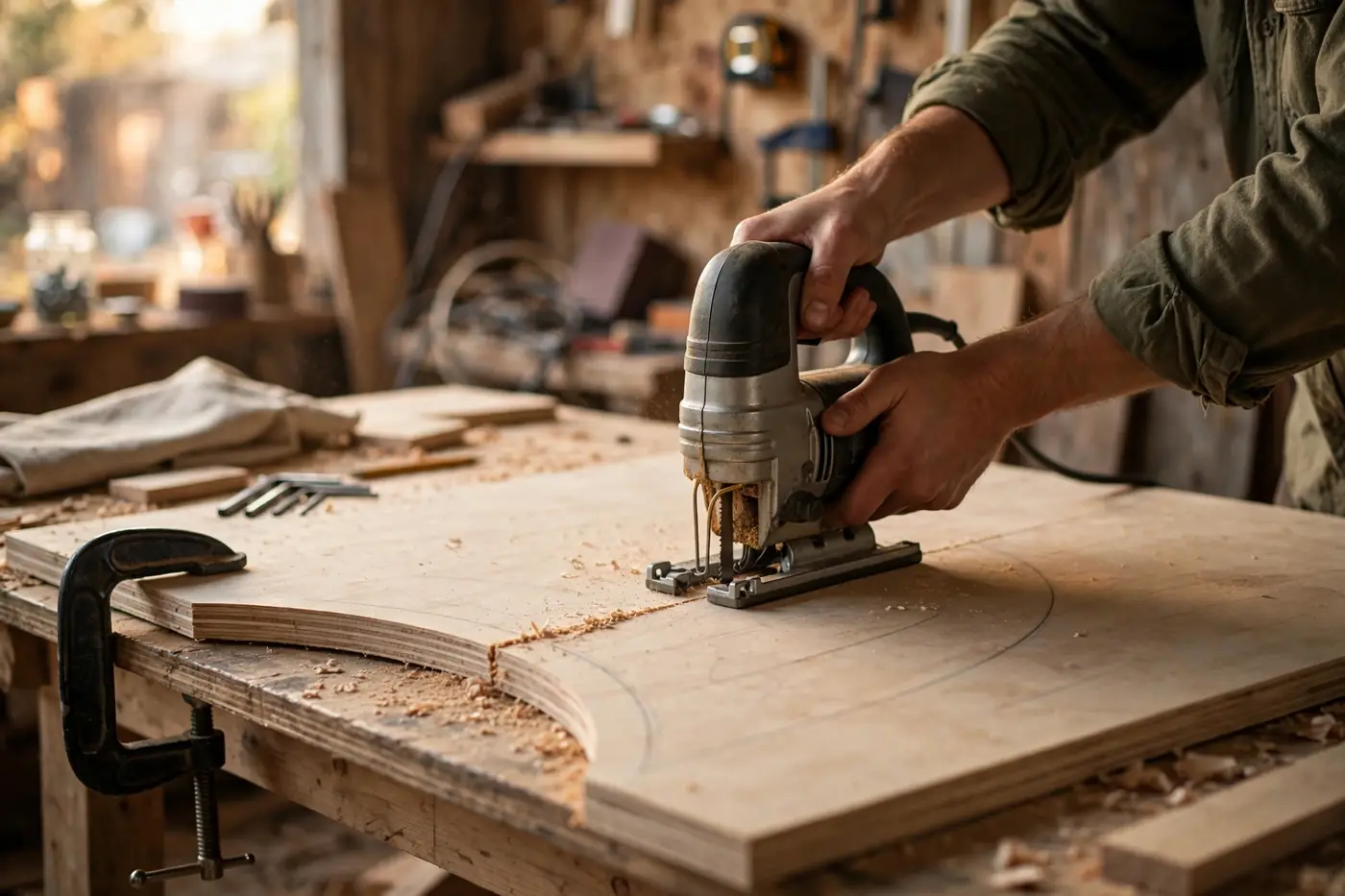
A jigsaw is the saw you buy for everything a straight-cutting saw can’t do: curves, circles, cutouts for sinks and outlets, decorative scrollwork, and freehand shapes in wood. It’s one of the most forgiving power saws a beginner can own — affordable, relatively safe, and capable of genuinely impressive work once you learn its quirks.
On This Page
- What You Can Actually Build With a Jigsaw
- How a Jigsaw Works (The 60-Second Version)
- The Features That Actually Matter
- Corded vs. Cordless
- How to Choose: Match the Saw to Your Projects
- Common Beginner Mistakes
- Key Takeaways
- FAQs
What You Can Actually Build With a Jigsaw
Before features and specs, it helps to see the jigsaw through projects. If any of these are on your list, a jigsaw earns its shelf space:
- Curved and shaped parts — arched trim, curved shelf brackets, decorative corbels, wooden signs with shaped edges.
- Cutouts — sink and cooktop openings in countertops, outlet and switch boxes in paneling, speaker holes, pet doors.
- Circles and arcs — round table tops, clock faces, wheel shapes for toys, curved garden bed edging.
- Scroll-style detail work — fretwork panels, puzzle pieces, intricate ornaments (with fine blades and patience).
- Rough curve cuts in construction lumber — notching rafters, trimming stair stringers, cutting curves in plywood subfloor.
- Occasional metal and plastic — with the right blade, a jigsaw cuts sheet metal, PVC, and laminate countertops.
Notice what’s missing: long straight rips in plywood, framing lumber cut to length, demolition. Those belong to the circular saw and reciprocating saw — the jigsaw’s straight-line accuracy is limited, and forcing it into that role produces wavy cuts and frustration. Our circular saw guide covers the straight-cut side of the shop.
How a Jigsaw Works (The 60-Second Version)
A jigsaw drives a short, narrow blade straight up and down — typically a few thousand strokes per minute — while you steer the tool’s flat base (the “shoe”) across the workpiece. The narrow blade is what makes curves possible: it can turn within its own kerf, unlike a wide circular saw blade locked to a straight line.
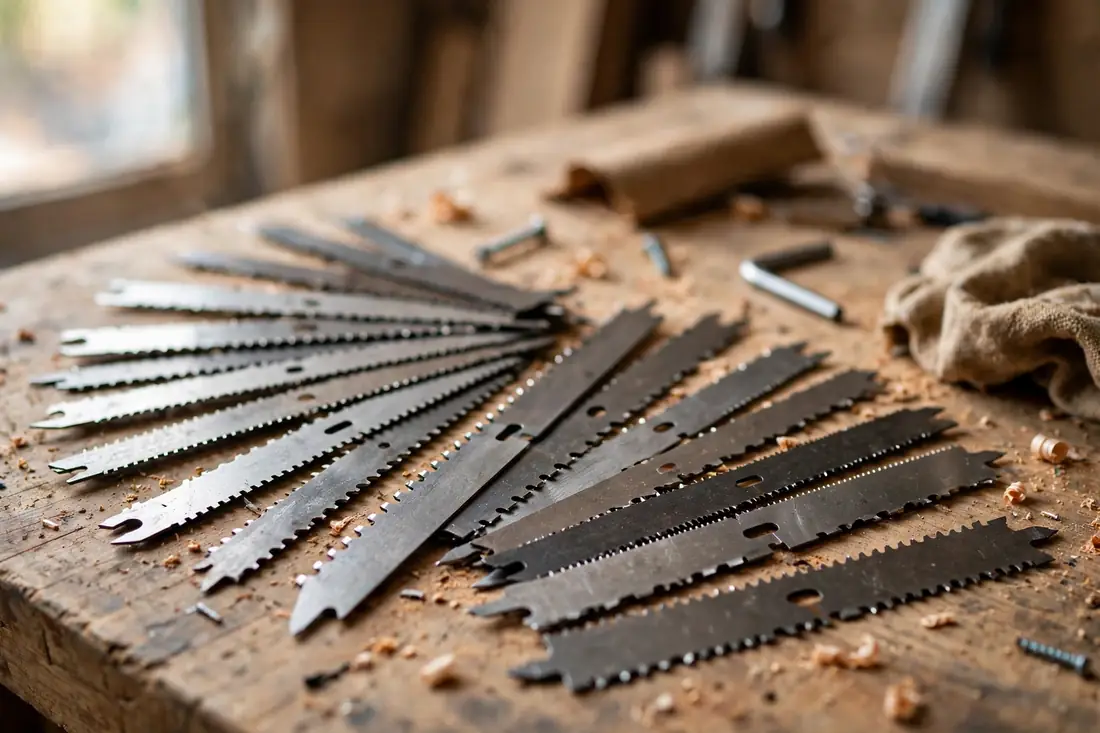
Most modern jigsaws add orbital action: the blade doesn’t just move up and down, it swings slightly forward on the cutting stroke, taking a bigger bite. More on that below — it’s the single most misunderstood feature on the tool.
The shoe tilts for bevel cuts (usually up to 45 degrees), and a roller guide behind the blade supports it to reduce deflection. Dust extraction ports, LED work lights, and blade guides round out the common extras.
The Features That Actually Matter
Orbital action (and when to turn it off)
Orbital action has settings — typically 0 through 3. Higher orbit means faster, rougher cuts: great for framing lumber and rough work where speed beats finish. Zero orbit gives the cleanest cut and the most control in curves, because the blade isn’t being shoved forward on each stroke. Rule of thumb: rough construction cuts get orbit, fine work and tight curves get none. Many beginners leave orbit cranked up and wonder why their curves wander — this is usually why.
Tool-less blade change
Worth insisting on. You’ll change blades often — switching from a coarse wood blade to a fine one, or from wood to metal — and a lever-actuated clamp beats fumbling with an Allen key every time. Also check that the saw accepts T-shank blades, the modern standard with the widest selection; older U-shank-only saws limit your blade options.
Variable speed with a dial (not just the trigger)
Trigger-only speed control is imprecise. A separate speed dial lets you set a maximum — slow for metal and plastic (which melt or overheat at high speed), fast for wood. This is one of the features that separates saws you’ll enjoy from saws you’ll fight.
Bevel adjustment
Most jigsaws tilt to 45 degrees for bevel cuts. What matters is how: tool-less bevel with positive stops at common angles (0°, 15°, 30°, 45°) is far more pleasant than a bolt you loosen with a wrench while guessing at the angle. Check that the shoe locks solidly — a wobbly shoe means wobbly bevels.
Blade support and guides
The blade is thin and wants to bend, especially in thick material. Better saws have a sturdy roller or guide system directly behind the blade that keeps it tracking straight. This is one of the quiet differences between a budget saw and a good one: in 1.5-inch hardwood, you’ll feel it.
Dust management
A blower that clears the cut line, a dust port that fits a shop vacuum, or both. Being able to see your pencil line is not a luxury — it’s the difference between cutting on the line and cutting near it. At minimum, look for an effective blower.
Handles: top-handle vs. barrel grip
Top-handle (D-handle) jigsaws are the common style — one hand on top, easy to control, good for most work. Barrel-grip saws put your hand low and close to the work, which some woodworkers prefer for intricate curve cutting because it lowers the center of gravity and improves feel. If you do a lot of scroll-style detail, try a barrel grip in the store; for general DIY, top-handle is the safe default.
Corded vs. Cordless
Corded jigsaws still exist and still make sense: they’re typically cheaper, never run out of power mid-cut, and the tool is lighter without a battery hanging off it. If your jigsaw lives at the workbench and your projects are weekend-scale, corded is a perfectly respectable choice.
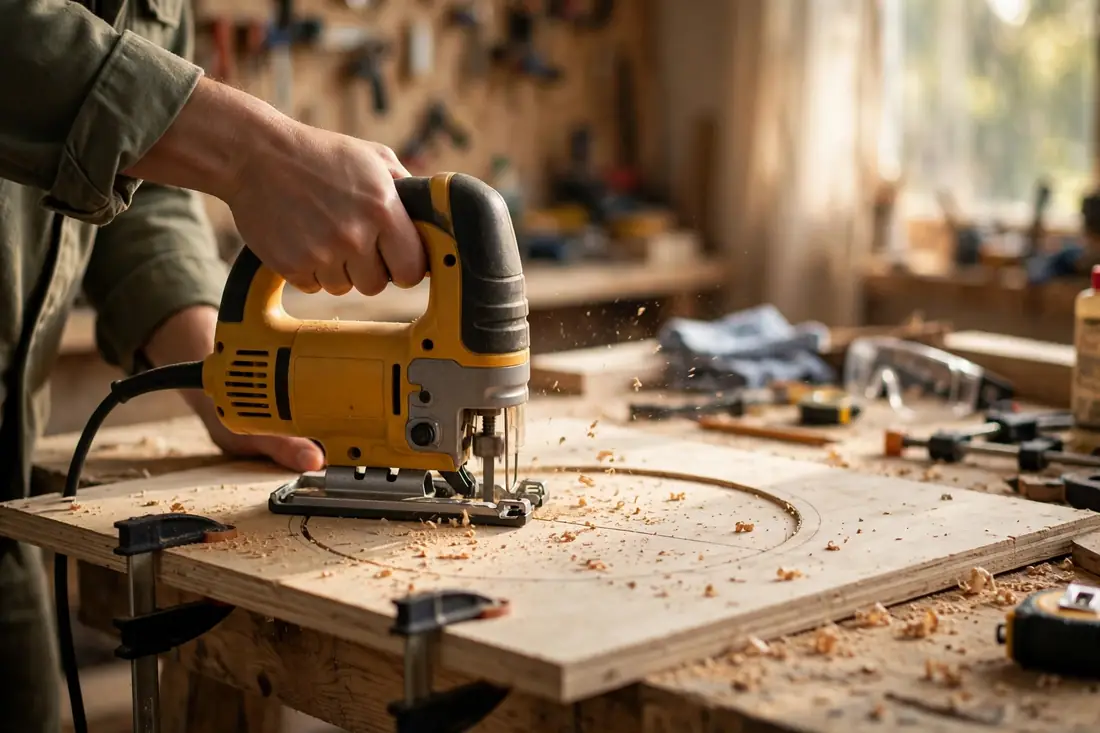
Cordless jigsaws have closed the performance gap for typical DIY work and win on convenience — cutting curves in a half-built deck or trimming something already installed is much nicer without dragging a cord. The catch is that you’re buying into a battery platform (or already own one), which affects the real price. If you’re weighing the broader corded/cordless question across your whole shop, the reciprocating saw guide pairs well with this one for understanding where each saw type fits.
How to Choose: Match the Saw to Your Projects
- Occasional DIYer (a few projects a year: a cutout here, a curved shelf there) — a basic corded or entry cordless jigsaw with tool-less blade change, variable speed dial, and 3–4 orbital settings. Don’t overthink it.
- Active hobbyist woodworker (furniture, signs, detailed work) — step up for better blade guidance, a solid tool-less bevel with detents, effective dust collection, and consider a barrel grip if curves are your main event.
- Remodeler / installer (countertops, flooring cutouts, on-site trim) — cordless on your existing battery platform, robust shoe, good LED lighting for dim corners, and a case that survives the truck.
- Metal and mixed-material work — prioritize low-speed control and a saw that runs smoothly at low RPM; blade selection matters more than the saw here.
One honest note: the jigsaw is a saw where blade quality often matters more than saw price. A mid-range saw with excellent blades will outperform an expensive saw running dull bargain blades. Budget for a blade assortment — coarse wood, fine wood, scrolling, and metal — alongside the tool.
Common Beginner Mistakes
- Pushing too hard. Let the blade cut at its own pace. Forcing the saw forward bends the blade, which is the main cause of cuts that aren’t square.
- Wrong blade for the material. Coarse wood blades in plywood cause tear-out; wood blades in metal die instantly. Match the blade to the job — TPI (teeth per inch) goes up as material gets thinner and harder.
- Cutting with the good face down (or up) incorrectly. Jigsaw blades cut on the upstroke, so splintering happens on the top face. Keep the show face down — or use a down-cutting blade for delicate surfaces.
- Skipping the pilot hole. For interior cutouts, drill a starter hole inside the waste area, drop the blade in, and cut outward to your line. Plunge-cutting freehand is an advanced move that usually ends badly.
- Ignoring blade drift on curves. Slow down in tight turns and let the blade steer; twisting the saw to force a turn bends the blade and ruins the cut.
Key Takeaways
- A jigsaw is the curve-and-cutout saw — buy it for shapes, circles, and interior cutouts, not straight rips.
- Orbital action speeds up rough cuts but hurts precision: dial it to zero for fine work and tight curves.
- Insist on tool-less T-shank blade change, a separate variable-speed dial, and a solid bevel mechanism.
- Blade quality and selection matter at least as much as the saw itself — budget for a good assortment.
- Corded is fine for bench work; cordless wins for on-site and installed-work convenience.
FAQs
Can a jigsaw cut a straight line?
Reasonably straight over short distances, especially with a guide clamped to the workpiece. For long straight rips in sheet goods, a circular saw with a straightedge is the right tool — that’s exactly what our circular saw picks are chosen for.
What thickness can a jigsaw cut?
Most jigsaws handle 2-inch softwood comfortably; hardwoods and thicker stock are slower and demand sharp blades with good guidance. Deep cuts in thick material are where cheaper saws show their limits through blade wander.
Can a jigsaw cut metal?
Yes, with a metal-cutting blade (high TPI, sometimes bimetal) and low speed. It handles sheet metal, aluminum, and thin steel stock well. It’s not a substitute for a dedicated metal-cutting saw on heavy stock, but for occasional cuts it’s very capable.
T-shank vs. U-shank blades — does it matter?
T-shank is the modern standard with far more blade options and a more secure grip in tool-less clamps. Unless you’re matching an old saw you already own, buy T-shank.
Why does my jigsaw vibrate so much?
Some vibration is inherent to the reciprocating motion, but excessive shaking usually means a dull or wrong blade, too much orbital action for the cut, or pushing too hard. Better saws also have counterbalance mechanisms that noticeably smooth things out.
Your Next Step
Write down the three projects you most want a jigsaw for, then buy the saw — and the blade assortment — that fits those projects, not some hypothetical future. Mount a fresh fine-cut blade, grab a piece of scrap plywood, and practice a few S-curves before touching your real workpiece. An hour of practice on scrap is worth more than any feature on the box.