Circular Saw Buying Guide: Types, Features, and How to Choose
A circular saw is the most versatile saw a DIYer can own. This guide walks through its anatomy, the main types, and the features that actually matter when you buy.
A circular saw is the most versatile cutting tool a DIYer can own: it rips plywood, crosscuts lumber, trims doors, and breaks down sheet goods. But the options (sidewinder, worm drive, corded, cordless, blade sizes) confuse first-time buyers. This guide walks through the tool piece by piece so you know exactly what you’re paying for.
On This Page
- Anatomy of a Circular Saw
- The Two Main Types: Sidewinder vs. Worm Drive
- Corded or Cordless?
- Features That Actually Matter
- How to Choose
- Key Takeaways
- Frequently Asked Questions
Anatomy of a Circular Saw
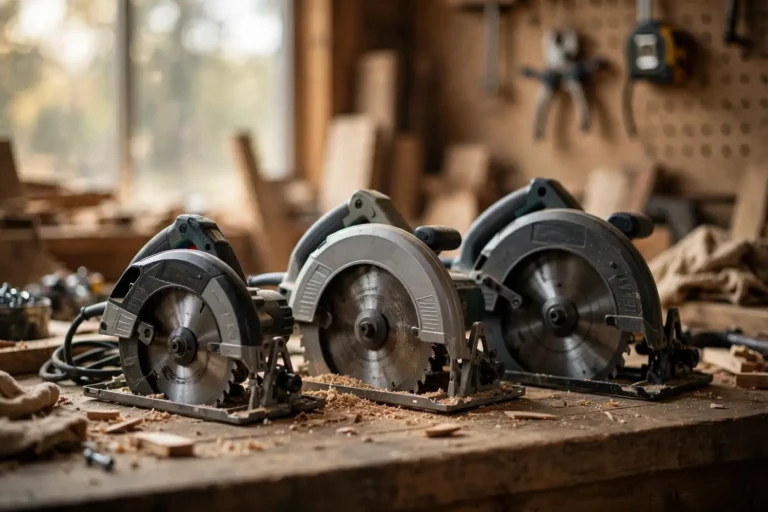
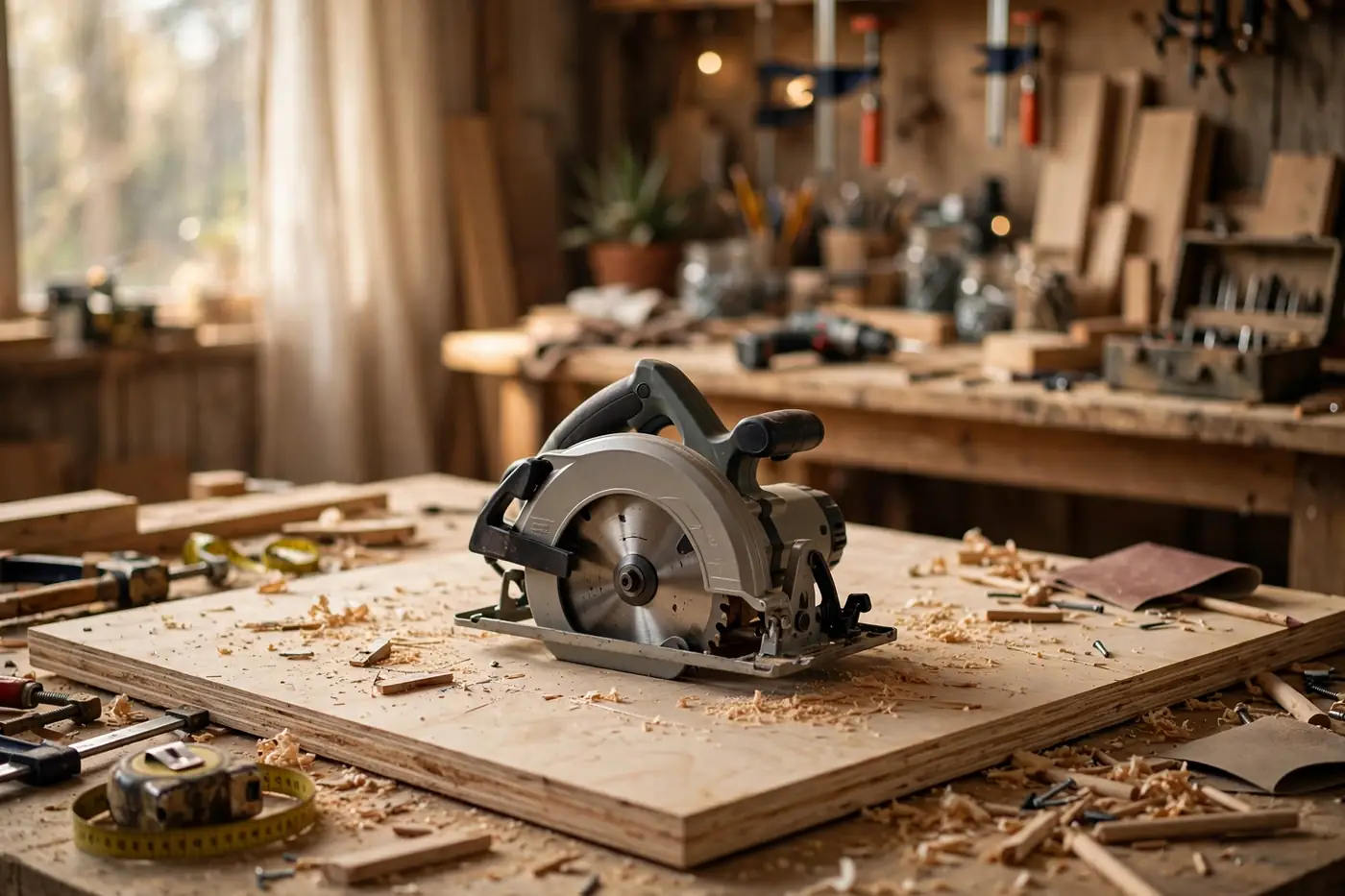
Before comparing models, learn the parts. Every circular saw — regardless of type — has the same basic anatomy:
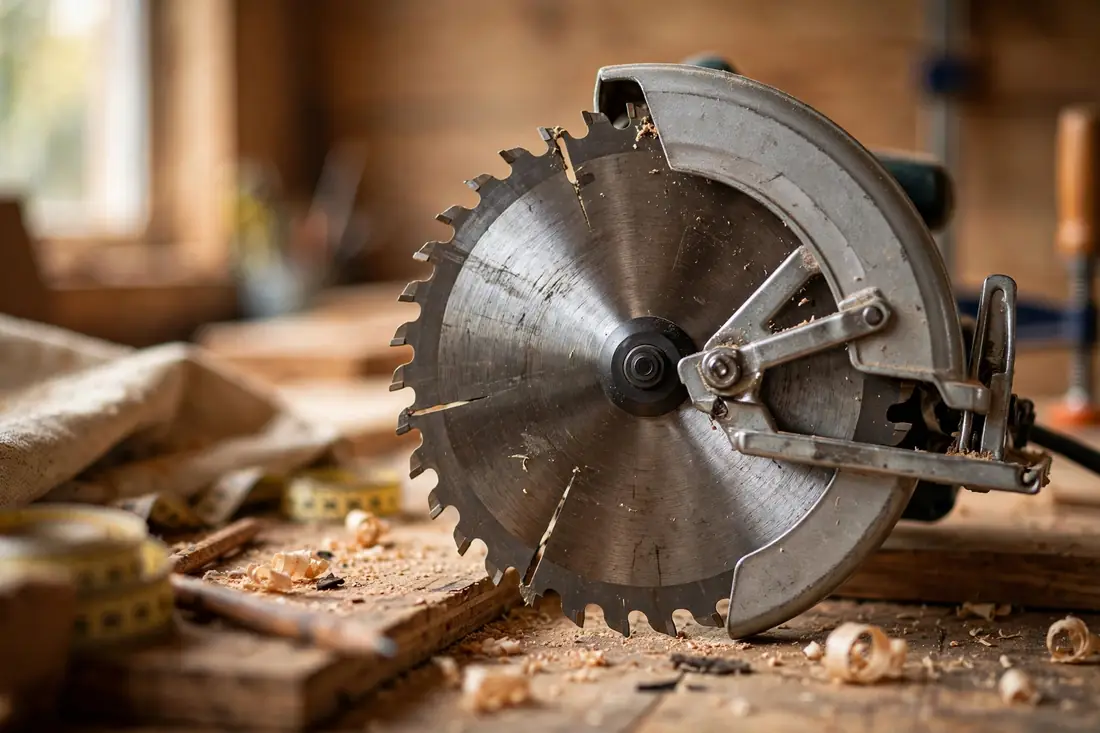
- Blade. The toothed disc that does the cutting. Most full-size saws use 7-1/4-inch blades; compact saws use smaller ones. The blade spins with the teeth pointing forward and down through the cut.
- Blade guard. The spring-loaded cover that retracts as you push into the cut and snaps back over the blade when you lift out. Never wedge it open — it’s the single most important safety device on the saw.
- Shoe (base plate). The flat metal plate that rides on the workpiece and keeps the cut square. A flat, rigid shoe (cast metal beats thin stamped steel) is the difference between straight cuts and wandering ones.
- Depth adjustment. A lever or knob that raises and lowers the blade. The rule: set the blade to extend about a quarter inch below the material — less exposed blade means safer, cleaner cuts.
- Bevel adjustment. Tilts the shoe (usually up to 45–50 degrees) for angled cuts. Check that it locks firmly with clear, readable angle markings.
- Motor housing and handle. On a sidewinder, the motor sits beside the blade with the main handle at the rear; the trigger usually has a safety lock you must press before pulling.
- Riving knife / splitter. A thin fin behind the blade that keeps the cut kerf open so the wood can’t pinch the blade and kick back. If your saw has one, never remove it.
Hold these parts in your mind when you pick up a saw in the store: wiggle the shoe (it shouldn’t flex), work the depth and bevel levers (they should move smoothly and lock solid), and retract the guard (it should snap back crisply). A saw that feels sloppy in the store won’t tighten up at home.
The Two Main Types: Sidewinder vs. Worm Drive
This is the classic fork in the road, and it’s simpler than it sounds.
Sidewinder (direct drive)
The motor sits directly beside the blade, driving it on the same axis. The blade is typically on the right side of the motor, which means right-handed users see the cut line easily. Sidewinders are lighter, more compact, and less expensive — and they make up the vast majority of saws DIYers buy. For general home workshop use, a sidewinder is almost always the right call.
Worm drive (and hypoid)
The motor sits behind the blade, connected through a worm-gear transmission. This puts the blade on the left side (great cut-line visibility for right-handed users), delivers more torque, and makes the saw longer and heavier. Worm drives are the traditional choice of framing crews who cut all day — the extra torque and durability earn their keep on a jobsite. For weekend DIY use, they’re usually overkill: heavier to lug around and pricier without a matching payoff.
Bottom line: unless you’re framing houses for a living, buy the sidewinder. It’s lighter, cheaper, easier to handle, and more than capable of everything a home workshop asks of it.
Corded or Cordless?
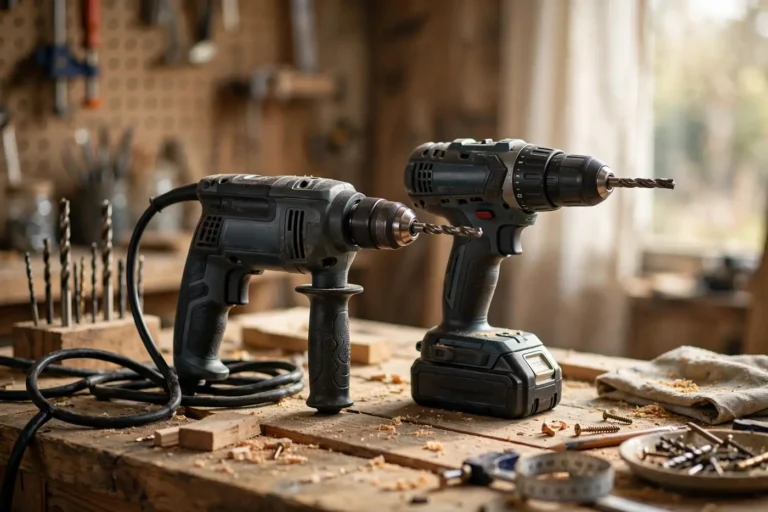
Circular saws come both ways, and both are legitimate. A corded saw gives you unlimited runtime and typically costs less — a sensible pick if your cutting happens near the shop and you do long ripping sessions. A cordless saw (usually 18V-class, running on the same batteries as your drill) gives you freedom: cutting at the back fence, on the roof, or anywhere the extension cord doesn’t reach.
Modern cordless circular saws with large batteries and brushless motors cut impressively well — most DIYers won’t feel underpowered. The practical deciding factor is your existing battery platform: if you already own 18V tools, a bare cordless saw is an easy, economical add. If this is your first big tool purchase and budget matters, corded gets you cutting for less money. One caution: ripping long sheets eats batteries fast, so cordless users should own at least two large packs for a full day of sheet work.
Features That Actually Matter
- Blade size. 7-1/4 inch is the standard for full-size saws — it cuts through dimensional lumber (2x material) at 90 degrees in a single pass and blades are available everywhere. Smaller compact saws (around 6-1/2 inch or less) are lighter and handier but can’t cut as deep. For a first and possibly only saw, 7-1/4 inch is the safe choice.
- Bevel capacity and stops. Look for bevel adjustment to at least 45 degrees with a positive stop at 45 (and ideally at 22.5) so common angles lock in without fiddling.
- Electric brake. Stops the blade within a second or two of releasing the trigger instead of letting it spin down. This is a genuine safety upgrade — worth prioritizing.
- Cut-line visibility. A good sight line to the blade — whether through an open guard design, a laser, or an LED light — determines how accurately you can follow a marked line. Lasers are nice; a bright LED and clear sight window matter more.
- Dust blower or port. A blower that clears dust off the cut line helps you see; a dust port that fits a shop vac keeps the air (and your lungs) cleaner. Either beats nothing.
- Spindle lock and easy blade changes. You’ll change blades more than you think — a tool-free or single-wrench change with a solid spindle lock saves real annoyance. This pairs with knowing your circular saw blades: the right tooth count for the material matters as much as the saw itself.
- Weight and balance. You’ll guide this saw with both hands for extended cuts. A well-balanced saw tracks straighter with less fatigue. If possible, hold candidates in the store.
Features you can mostly ignore: gimmicky laser-only guidance with no sight window, ultra-high RPM claims (blade quality matters more than a few hundred RPM), and included blades — the stock blade is a starter, and you’ll want a quality blade for your main material anyway.

How to Choose
- Start with sidewinder, 7-1/4 inch. This covers the overwhelming majority of DIY buyers. Only consider worm drive if you’re doing heavy framing regularly.
- Decide corded vs. cordless based on where you cut and what batteries you already own (see above).
- Prioritize the electric brake and a rigid shoe. These affect safety and cut quality more than motor specs.
- Check the adjustments in person if you can. Depth lever, bevel lock, guard action — smooth and solid beats sloppy every time.
- Budget for a good blade. The saw is half the equation; a quality sharp blade appropriate for your material (fewer teeth for fast rip cuts, more teeth for clean crosscuts and plywood) transforms any saw’s performance.
- Don’t forget safety gear. Eye and hearing protection are non-negotiable with circular saws — review our tool safety rules before your first cut, especially the sections on body position and letting the blade stop before setting the saw down.
Key Takeaways
- Learn the anatomy first: blade, guard, shoe, depth and bevel adjustments, riving knife. Every buying decision maps back to these parts.
- Sidewinder saws suit nearly all DIYers; worm drives are for heavy framing work.
- 7-1/4-inch blades are the standard — they cut 2x lumber in one pass and replacements are everywhere.
- An electric brake, a rigid shoe, and good cut-line visibility matter more than headline RPM or motor wattage.
- Budget for a quality blade and proper safety gear alongside the saw itself.
Frequently Asked Questions
What size circular saw do I need as a beginner?
A 7-1/4-inch sidewinder. It’s the standard size, handles the thickest material a DIYer typically cuts, and has the widest blade selection. Smaller compact saws are handy as a second saw, not as your only one.
Can a circular saw cut straight enough without a table saw?
Yes, with a guide. Clamp a straightedge (a factory edge of plywood, a metal ruler, or a purpose-made saw guide) to the workpiece and run the shoe against it. The results rival a table saw for breaking down sheet goods.
What’s the difference between a circular saw and a miter saw?
A circular saw is handheld and goes to the work — best for long cuts and sheet goods. A miter saw is stationary and the work goes to it — best for precise crosscuts and angles in trim and framing lumber. They complement rather than replace each other.
How deep can a 7-1/4-inch saw cut?
At 90 degrees, a typical 7-1/4-inch saw cuts a little over 2 inches deep — enough to cut through standard 2x dimensional lumber (which is actually 1-1/2 inches thick) in one pass. At 45 degrees the depth drops to roughly 1-5/8 inches.
Why does my circular saw kick back?
Kickback usually comes from the wood pinching the blade behind the cut — the kerf closes and grabs the spinning blade, throwing the saw backward. Causes include a missing or removed riving knife, cutting warped lumber, twisting the saw mid-cut, or a dull blade. Keep the riving knife in place, support both sides of the cut, and let the blade reach full speed before entering the wood.
Are cordless circular saws powerful enough?
For DIY work, yes. Modern 18V-class brushless saws with high-capacity batteries cut framing lumber and plywood without drama. They’ll drain packs faster than a drill will, so keep a second large battery charged for longer sessions.
Ready to compare specific models? Check our circular saw picks for 2026 — organized by first saw, pro framing, and track-compatible options, with the reasoning behind every pick spelled out.