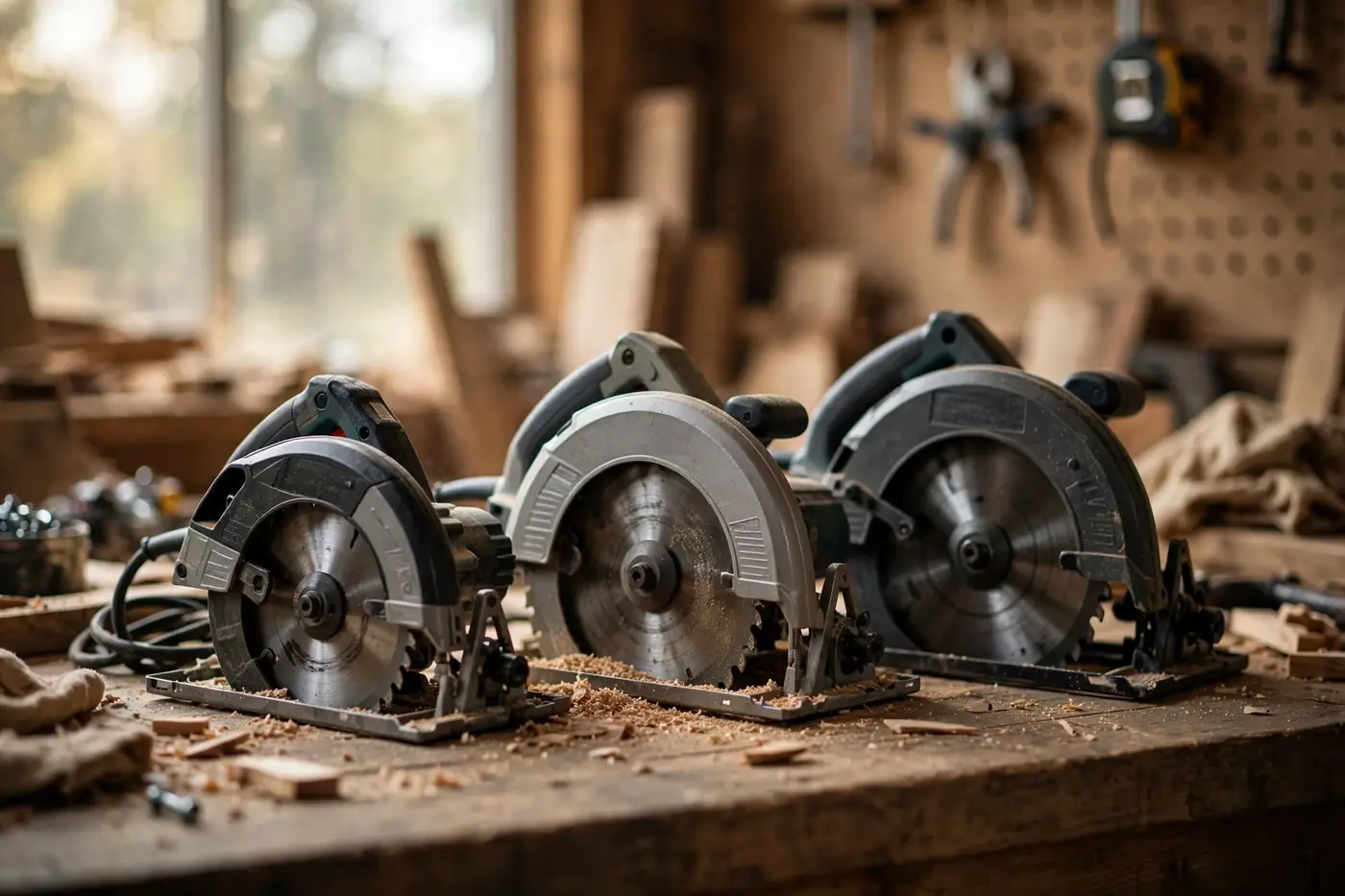
Best Circular Saws for Home Workshops (2026)
Choosing a circular saw? This research-based roundup sorts saws into use-case classes — first saw, cordless convenience, pro-style power — so you buy the right one for your workshop.
The Short Answer
For most home workshops, a cordless 18V-class saw with a 7-1/4 inch blade hits the sweet spot — plenty of power for plywood and lumber without a cord dragging across the work. First-time buyers should prioritize a comfortable grip, clear sightlines, and easy depth adjustment over raw power. Match the saw class to your cutting locations.
Key Takeaways
- Your first saw should be forgiving: good visibility, easy adjustments, and manageable weight matter more than peak power.
- Cordless 18V-class saws now handle the majority of home workshop cutting — corded still wins for sustained heavy ripping.
- Pro-style saws (worm-drive-style or rear-handle layouts) offer more cutting authority but demand more respect and muscle.
- Blade quality affects cut quality more than the saw itself — budget for a good blade.
- Always verify current specs and prices on manufacturer and retailer pages; tool lineups change often.
In This Guide
How We Picked: Our Methodology
A note on how this roundup was put together. Our picks are research-based: we compiled them from manufacturer-published specifications, official product documentation, and widely reported user feedback from DIYers and hobbyists — not from hands-on testing in a workshop. We have not personally hands-on tested every model discussed here, and we name no specific model as “tested by us.”
Specifications and prices change frequently. Before buying, verify current specs, kit contents, and pricing on the manufacturer’s official page and your retailer’s listing. The classes and criteria below are designed to help you evaluate any saw you are considering.
Best First Circular Saw for Beginners
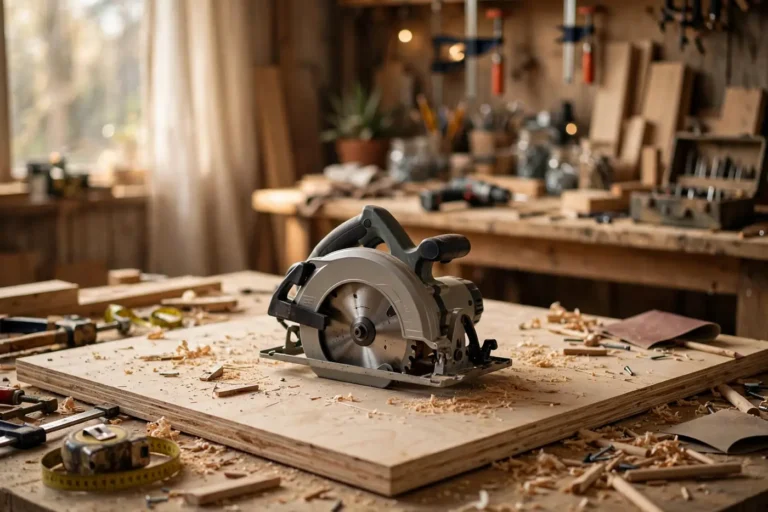
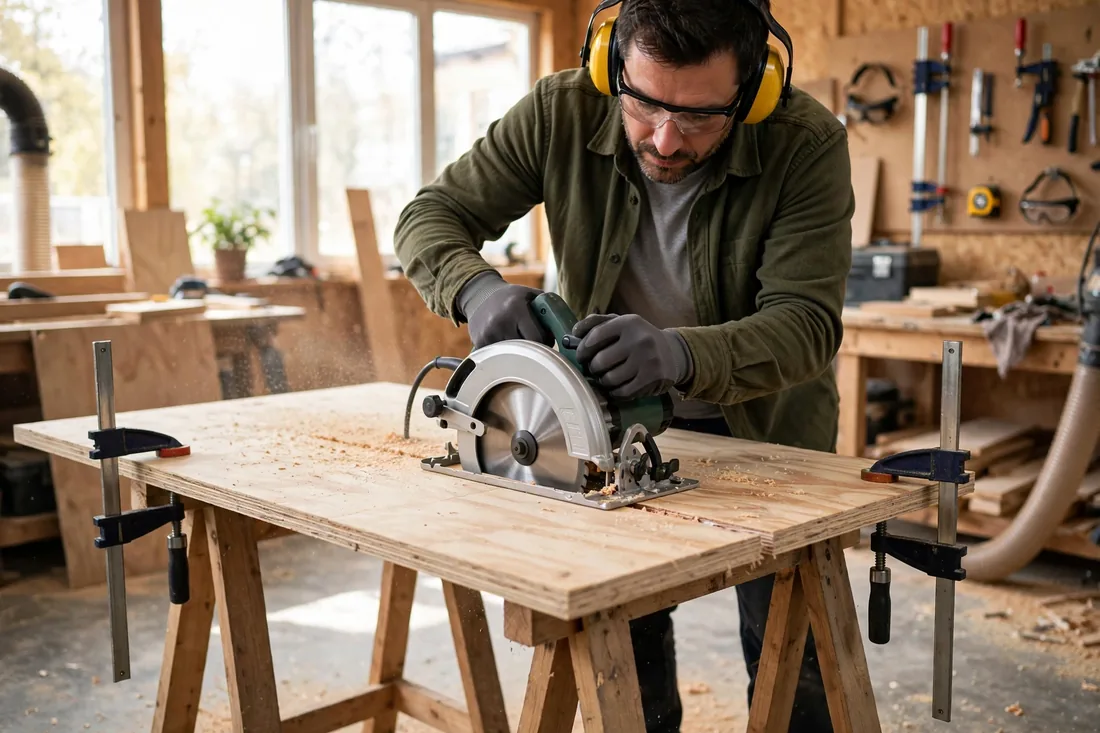
If you have never owned a circular saw, your first one should make cutting feel controlled rather than intimidating. The beginner-friendly class is defined less by power and more by forgiveness: a clear view of the cut line, smooth depth and bevel adjustments that lock securely, a comfortable handle, and a balanced feel that keeps both hands comfortably on the saw. Clamp the workpiece securely and keep both hands on the saw — one on the main handle, one on the front knob — maintaining firm control throughout the cut. Never hold the workpiece with your free hand near the blade.
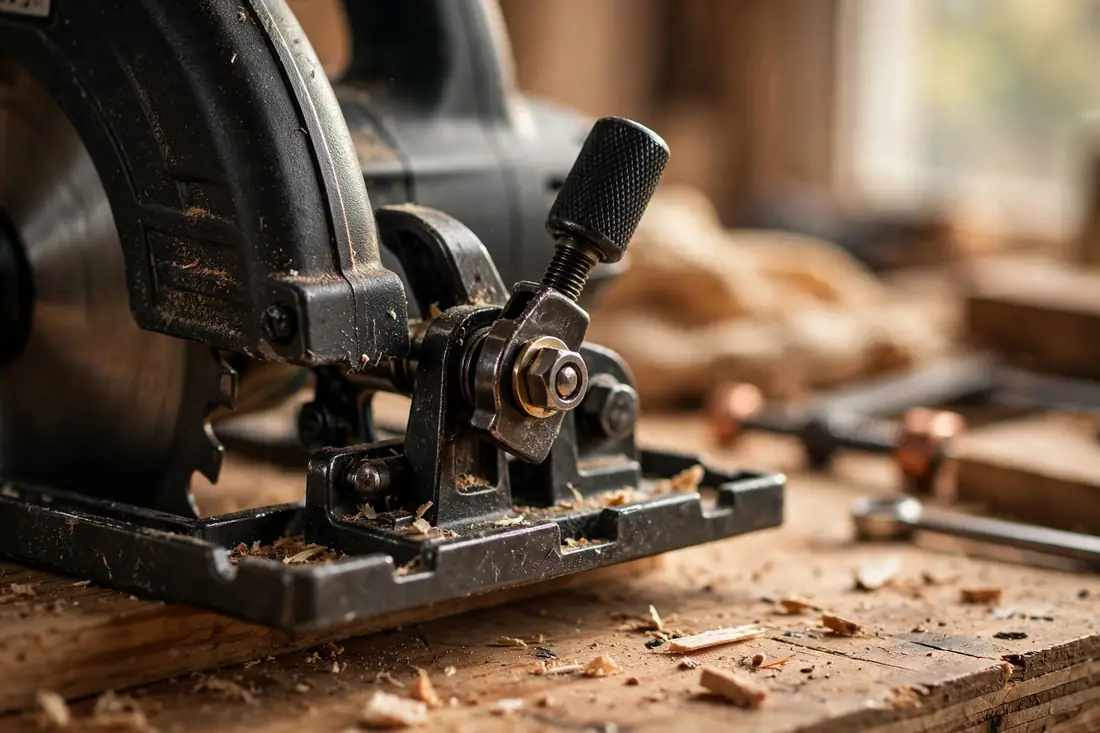
What to look for: a standard 7-1/4 inch blade size (the most common, with the widest blade selection), a bevel capacity up to around 45–50 degrees, and a depth adjustment that moves smoothly and locks without slipping. Corded models in this class are affordable and never run out of battery mid-cut, which is one less thing for a beginner to manage. Look for a saw with a retractable blade guard that moves freely — a sticky guard is both annoying and unsafe.
Trade-offs: entry-class saws typically have lighter-duty shoe plates (the base that rides on the wood), which can flex if you lean on the saw, and their motors, while adequate, slow down sooner in thick or dense material. They are not the tool for ripping stacks of lumber all day. But for breaking down plywood, cutting 2x lumber to length, and general around-the-house work, they are genuinely capable.
Best for: first-time saw owners, homeowners tackling their first deck or shed project, and anyone who wants a saw that teaches good habits. Before you buy, our circular saw buying guide explains the anatomy of the tool so every feature on the box makes sense.
Best Cordless Circular Saw for Convenience
The cordless class is for workshops and job sites where the cord is the enemy: cutting in the driveway, trimming lumber at the far end of the yard, or working in a garage with one outlet. Modern cordless saws on 18V-class platforms (often paired, or with high-demand battery options) cut plywood and dimensional lumber with real authority — a far cry from the underpowered cordless saws of a decade ago.
What to look for: first, check that the saw belongs to a battery platform you already own or plan to join — buying into a whole new battery family for one tool is expensive. Look for a brushless motor, a 7-1/4 inch blade (compact 6-1/2 inch saws exist and are lighter, but blade choice is narrower), and an electronic brake that stops the blade quickly when you release the trigger. Kit saws that include a high-capacity battery are worth the premium; a circular saw is one of the hungriest cordless tools, and small batteries drain fast under load.
Trade-offs: runtime is the eternal compromise. Sustained ripping — long cuts through thick material — drains batteries quickly, and you will feel the saw slow if you push a small pack too hard. Cordless saws also tend to cost more than equivalent corded models once you account for batteries. And weight shifts toward the battery end, which changes the balance compared with a corded saw.
Best for: DIYers who already own the battery platform, anyone cutting away from outlets, and workshops where cord management is a constant hassle. Pair the saw with the right saw blades for the material — blade choice affects cordless performance as much as the motor does.
Best Pro-Style Saw for Maximum Cutting Power
Pro-style saws — including worm-drive-style and rear-handle layouts alongside high-output sidewinders — are built for cutting authority: long rips in thick lumber, dense engineered beams, and all-day framing work. The defining traits are torque that does not fade, heavier-duty construction, and a feel that rewards confident handling.
What to look for: a robust motor (corded pro-style saws are still the kings of sustained power; high-output cordless versions exist for those already invested in the platform), a rigid shoe that stays flat under load, and sightlines that suit your cutting style — left-blade and right-blade configurations each have loyal followings, and the “right” one depends on which hand you cut with and what you are used to. Magnesium components, where offered, cut weight without sacrificing rigidity.
Trade-offs: these saws are heavier and more expensive, and their power demands respect — a pro-style saw binds harder and kicks back with more force if your technique slips. They are also overkill for occasional plywood breakdowns; buying one for light use is like commuting in a dump truck. The learning curve is real, and beginners should build fundamentals on a friendlier saw first.
Best for: serious DIYers framing walls and building decks, prosumer woodworkers milling their own lumber, and anyone whose cutting volume justifies the weight and cost. If your projects lean more toward curves and cutouts than straight rips, check our jigsaw guide first — the right tool depends on the cuts you actually make.
Class-by-Class Comparison
Compare what each saw class typically offers. Individual models vary — always confirm the spec sheet before buying.
| Criterion | First-Saw Class | Cordless Convenience Class | Pro-Style Class |
|---|---|---|---|
| Power source | Corded common; some cordless | Battery (platform-dependent) | Corded or high-output cordless |
| Blade size | Typically 7-1/4 in | 6-1/2 in or 7-1/4 in | Typically 7-1/4 in |
| Weight class | Light to mid-weight | Mid-weight (battery adds heft) | Heaviest |
| Cutting authority | Adequate for general DIY | Strong for intermittent cuts | Sustained heavy ripping |
| Adjustment quality | Functional, lighter-duty | Varies by model tier | Heavy-duty, precise |
| Best workload | Learning, general projects | Cutting away from outlets | Framing, dense material |
How to Choose a Circular Saw
Start with where you cut. If your workshop has outlets everywhere and you mostly break down sheet goods on sawhorses in the garage, a corded saw gives you unlimited runtime for less money. If you cut in the driveway, the backyard, or a garage with one sad outlet behind the water heater, cordless convenience will change how often you reach for the saw. Be honest about your real cutting locations, not the aspirational ones.
Next, consider blade side and sightlines. The blade sits on the left or right of the motor, and which feels natural depends on your dominant hand and how you were taught. Neither is objectively better, but switching sides later feels strange — if you can, handle both layouts before committing. Clear sightlines to the cut line matter more than most beginners expect; a saw you cannot see past is a saw that cuts crooked.
Then think about the battery question, if you go cordless. A circular saw is one of the most battery-hungry tools you can own, so the platform decision carries real weight: larger-capacity packs, fast chargers, and a lineup of other tools you will actually buy. Buying a cordless saw on a platform you do not otherwise use is the most expensive way to own a saw.
Finally, budget for the blade. The blade that ships with most saws is a general-purpose compromise. A quality blade matched to your material — fine-tooth for plywood, framing blades for 2x lumber — improves cut quality more than upgrading the saw itself. Treat the stock blade as a starter and plan the upgrade from day one.
Frequently Asked Questions
What size circular saw do I need for DIY?
A 7-1/4 inch saw is the standard recommendation for home workshops: it cuts 2x lumber at 90 degrees and at common bevel angles, and blades are available everywhere. Smaller saws (6-1/2 inch) are lighter and handy, but their shallower cut depth and narrower blade selection make them a compromise as a primary saw.
Can a cordless circular saw cut 2x4s?
Yes — modern 18V-class cordless saws cut dimensional lumber without drama. Where they show limits is sustained ripping: long cuts through thick stock drain batteries and can slow the blade if you push too hard. For intermittent cuts, cordless is plenty; for ripping all day, corded still has the edge.
What is the difference between a sidewinder and a worm drive saw?
A sidewinder (direct drive) has the motor in line with the blade — lighter, more common, and fine for most work. A worm-drive-style saw gears the motor behind the blade for more torque and a different balance, traditionally favored by framers. For most DIYers, a good sidewinder does everything needed; worm-drive-style saws earn their keep in heavy framing.
How do I get straight cuts with a circular saw?
Clamp a straightedge or a dedicated guide to the workpiece and ride the saw’s shoe against it — freehand straight cuts are a skill that takes practice. Mark your line, account for the blade’s offset from the shoe edge, and let the blade reach full speed before entering the cut. A sharp, appropriate blade matters as much as technique.
How often should I replace the blade?
When cuts start burning the wood, the saw feels like it is working too hard, or you notice chipped teeth — those are the signs. There is no calendar schedule; it depends on use. Our saw blades article explains tooth counts, when to swap, and when a blade is done for good.
Your Next Step
Decide corded or cordless based on where you actually cut, then shortlist saws in the matching class from established manufacturers. Compare shoe rigidity, adjustment smoothness, and kit contents — then verify specs and current prices on the official pages. Before your first cut, read our circular saw buying guide for setup and technique fundamentals that make any saw cut better.