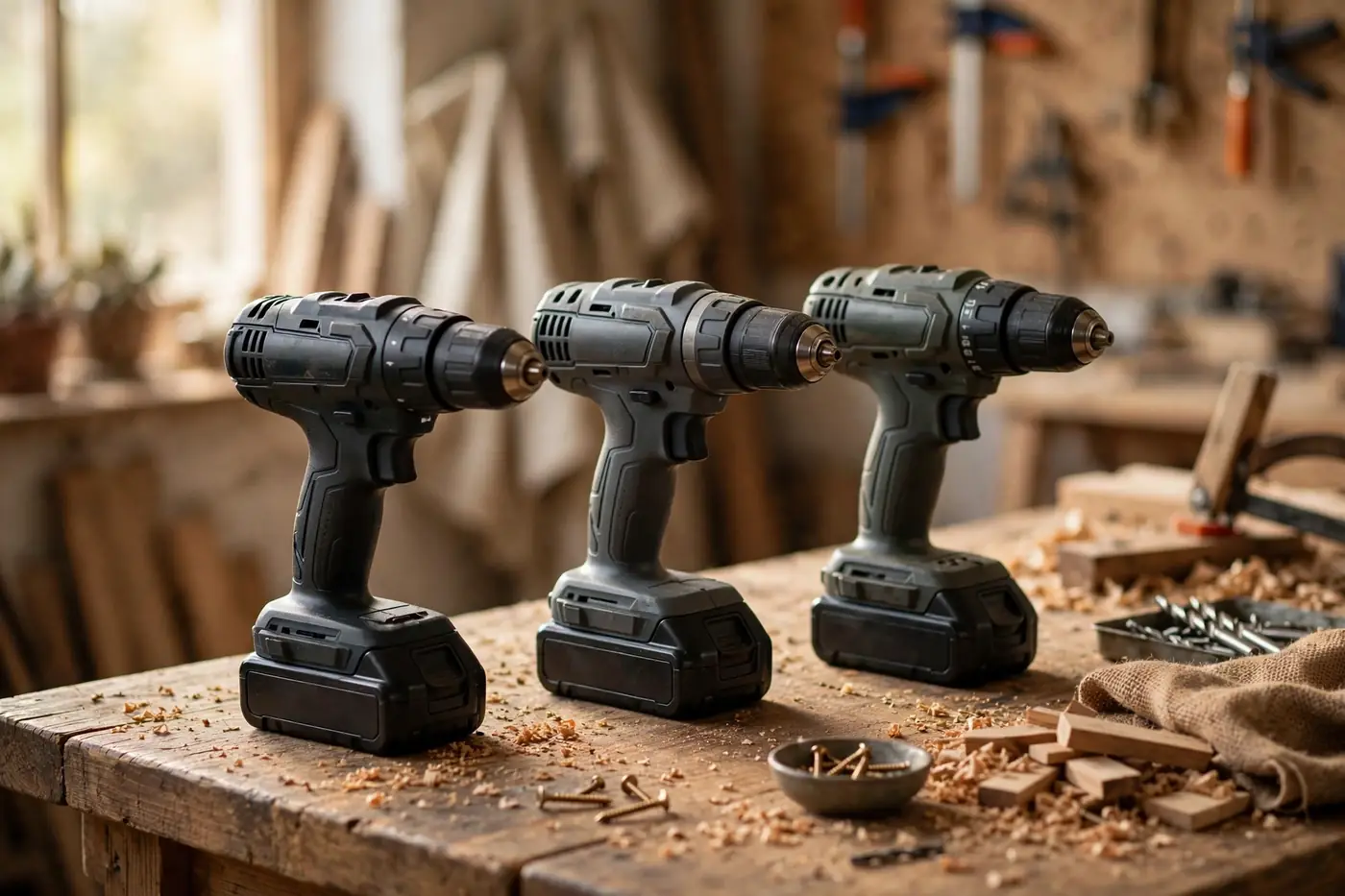
Best Cordless Drills for DIYers (2026)
Not sure which cordless drill deserves your money? This research-based roundup matches drill classes to real DIY workloads — so you buy the right drill the first time.
The Short Answer
For furniture assembly, shelves, and pilot holes, a compact 12V-class drill is plenty and easier to handle. For bigger projects — decks, framing-adjacent work, long fasteners — an 18V-class all-rounder is the sweet spot for most DIYers. Match the drill class to the hardest job you realistically do, and let the battery platform guide the decision.
Key Takeaways
- Match the drill class to your workload: compact 12V for light tasks, 18V for all-round DIY, heavy-duty 18V-class for demanding fastening and drilling.
- Most homeowners never outgrow a good 18V-class drill/driver — it covers the widest range of household projects.
- Battery platform commitment matters more than any single drill: pick a family of tools you can grow into.
- Brushless motors are worth the premium if you drill or drive screws weekly; brushed models are fine for occasional use.
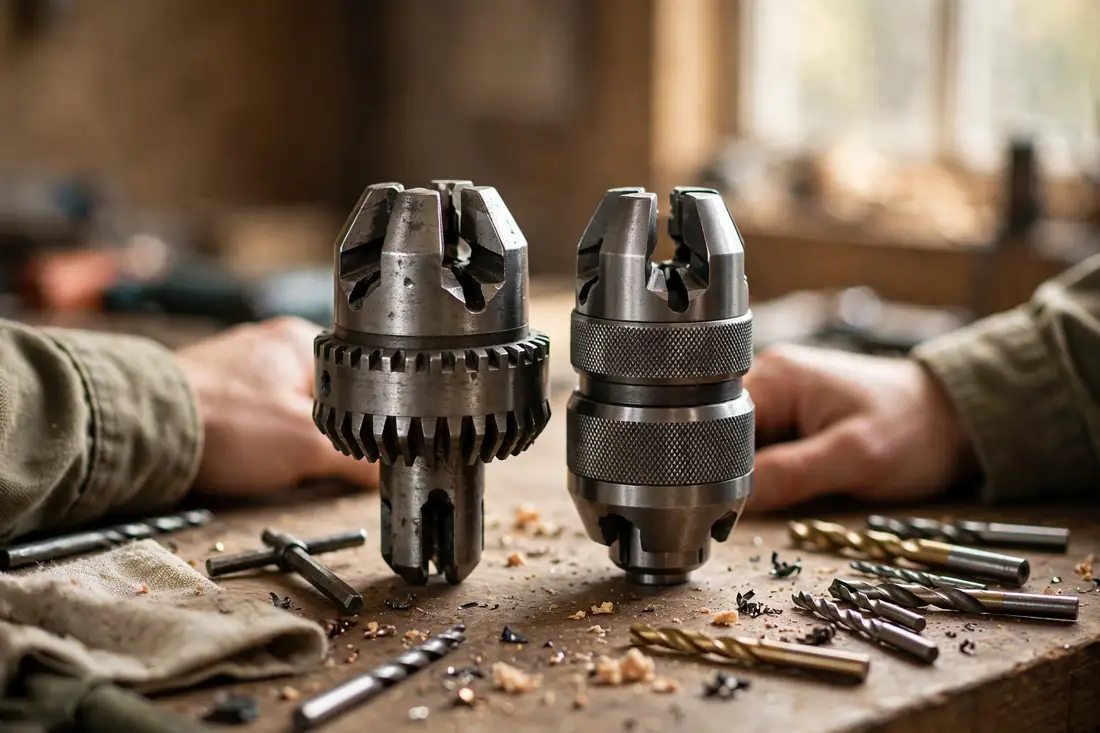
- Chuck size, speed ranges, and weight class tell you more about a drill than any marketing claim — compare those, not hype.
In This Guide
How We Picked: Our Methodology
A note on how this roundup was put together. Our picks are research-based: we compiled them from manufacturer-published specifications, official product documentation, and widely reported user feedback from DIYers and hobbyists — not from hands-on testing in a lab. We have not personally hands-on tested every model discussed here, and we name no specific model as “tested by us.”
Tool specifications and prices change frequently, sometimes without notice. Before you buy anything, verify the current specs, kit contents, and pricing on the manufacturer’s official page and your retailer’s listing. The classes and criteria below are designed to help you shop wisely no matter which brand you land on.
Best Compact 12V-Class Drill for Light DIY
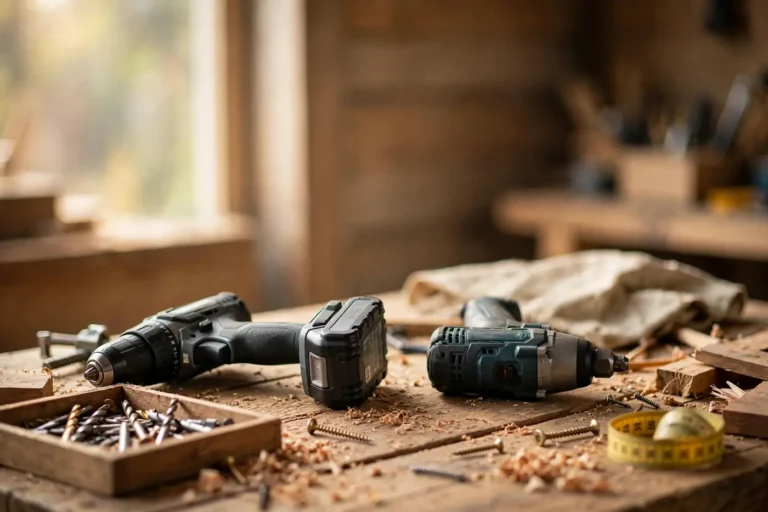
The compact 12V class exists for one reason: drilling and driving where a big drill is a burden. Think assembling flat-pack furniture, mounting curtain rods, hanging picture frames, installing cabinet hardware, and drilling pilot holes in softwood. If your project list reads like a honey-do list rather than a construction schedule, this is your class.

What to look for: a drill/driver that feels balanced with a compact battery installed — short head length, light bare weight, and a chuck that typically tops out around 3/8 inch in this class. Most 12V-class drills offer two speed ranges: a slower range for driving screws and a faster range for drilling. A 15+1 or 20+1 clutch setting range is plenty for avoiding stripped screws in soft materials. Brushless versions of these compact drills are worth considering because the smaller batteries benefit most from the efficiency gains.
Trade-offs: the smaller batteries drain faster under load, and the lower power ceiling shows when you try to drive long screws into dense lumber or bore large-diameter holes. You are trading raw capability for comfort and control. Also note the 12V platform offers fewer tools to expand into, so check the family includes an impact driver or small saw you might want later.
Best for: apartment dwellers, renters, first-tool buyers, and anyone whose drilling happens indoors in finished spaces. If you pair it with the right drill bits, a compact 12V drill handles the vast majority of light household work.
Best All-Round 18V-Class Drill for Most DIYers
If you buy exactly one cordless drill and want it to handle almost everything a homeowner throws at it, the 18V-class all-rounder is the answer. This class sits at the center of every major manufacturer’s lineup: enough power for deck screws and spade bits, but still comfortable enough for an afternoon of assembling furniture or building shelving.
What to look for: a half-inch chuck, two speed ranges, and a brushless motor if your budget allows. The half-inch chuck matters more than it sounds — it accepts the full range of common bits and accessories, while smaller chucks lock you out of some larger spade bits and hole saws. Most 18V-class drills in this bracket include a 20+ position clutch, a belt hook, and kit options with two batteries, which is the configuration worth buying: one battery charging while you work on the other is a genuine productivity upgrade.
Trade-offs: weight. An 18V-class drill with a full-size battery can be noticeably heavier than a 12V-class tool, and over a long day of overhead work (curtain rods, ceiling fixtures) your arm will know the difference. They are also longer and bulkier, so tight cabinet interiors and between-stud bays can be awkward. For those moments, some DIYers eventually add a compact 12V-class tool as a companion — our drill buying guide walks through that decision in detail.
Best for: homeowners with a project list, DIYers building out a workshop, and anyone who wants one drill that rarely says no. This is the class I recommend most often when someone asks me where to start.
Best Heavy-Duty-Class Drill for Demanding Work
The heavy-duty class is for DIYers whose projects blur into prosumer territory: building a deck, installing a fence, boring through doubled-up studs, driving structural screws, or running large hole saws for plumbing and electrical rough-in. These are typically 18V-class tools tuned for maximum output — bigger motors, beefier gearboxes, and an appetite for high-capacity batteries.
What to look for: a brushless motor, a half-inch all-metal chuck, and a design that explicitly supports the manufacturer’s largest battery packs. What separates heavy-duty drills is sustained output — how long they keep delivering power without fading or overheating. A side handle or an attachment point for one is a practical sign the tool is meant for high-torque work, since it helps you control the drill when a big bit binds.
Trade-offs: these drills are heavier, longer, and more expensive than standard 18V-class models, and that penalty shows up on every light task. They are overkill for assembling furniture or drilling pilot holes, and the extra bulk can make them clumsy in finished-space work. They also drink batteries: plan on high-capacity packs, which add their own weight and cost. Unless your project list genuinely includes demanding drilling, this class buys capability you will rarely use.
Best for: serious DIYers building decks and fences, homeowners doing their own rough-in work, and anyone who already owns an 18V-class all-rounder and needs a second drill for the hard stuff. If you regularly drive long fasteners, also read our drill vs impact driver comparison — an impact driver often pairs better with this workload than a bigger drill.
Best Value-Class Drill for Tight Budgets
The value class is where price meets adequacy: drills that cost meaningfully less than the flagship models while still covering genuine DIY workloads. This class includes brushed-motor models from major brands, previous-generation brushless tools, and kit deals that bundle a drill with batteries and a charger at an aggressive price.
What to look for: focus on the battery platform first and the drill second. A budget drill inside a strong 18V ecosystem is a better buy than a slightly nicer drill on a platform with few tools, because your next five tool purchases will follow the battery. Check that the kit includes at least one usable battery (two is better) and a real charger rather than a bare tool that assumes you already own batteries. Brushed motors are perfectly serviceable here — they are simpler, cheaper, and fine for intermittent weekend use.
Trade-offs: brushed motors run less efficiently and wear faster than brushless ones, so heavy weekly use will shorten their practical lifespan. Value kits sometimes include lower-capacity batteries that drain quickly under load. Be skeptical of no-name ultra-cheap drills: battery safety certification, warranty support, and parts availability matter more than a bargain price. Stick with established brands even in the budget tier.
Best for: first-time buyers testing the waters, landlords maintaining a few properties, and anyone whose drill will see action a few weekends a year rather than a few hours a week.
Class-by-Class Comparison
Use this table to compare what each drill class typically offers. These are class-level characteristics — individual models vary, so check the spec sheet of any specific drill before buying.
| Criterion | Compact 12V-Class | All-Round 18V-Class | Heavy-Duty-Class | Value-Class |
|---|---|---|---|---|
| Voltage class | 10.8V/12V max platform | 18V/20V max platform | 18V/20V max, high-output | Varies (12V or 18V) |
| Chuck size | Typically 3/8 in | Typically 1/2 in | 1/2 in, often all-metal | 3/8 in or 1/2 in |
| Speed ranges | Two-speed gearbox common | Two-speed gearbox standard | Two-speed, tuned for torque | Two-speed common |
| Battery approach | Compact packs; swap often | Standard packs; kits with 2 best | High-capacity packs recommended | Often one smaller pack in kit |
| Weight class | Lightest | Mid-weight | Heaviest | Light to mid-weight |
| Best workload | Light indoor tasks | General homeowner projects | Decks, rough-in, large bits | Occasional weekend use |
How to Choose the Right Cordless Drill
Start with the hardest job, not the average one. Write down the three toughest drilling or driving tasks you realistically expect in the next two years — if the list includes deck screws or hole saws, you need the 18V class; if it tops out at assembling furniture and hanging shelves, the 12V class will serve you well and feel better doing it. Buying for fantasy projects is how drills end up too heavy to enjoy and too expensive to justify.
Next, choose the battery platform before the drill. You are not really buying a drill; you are joining a family of tools that share batteries. Look at the manufacturer’s full lineup: does it include an impact driver, a circular saw, a reciprocating saw, and an orbital sander you might want someday? The best drill in the world is a bad buy if it strands you on a platform with nothing to grow into. This platform-first thinking is the single most common advice experienced DIYers give, and it is worth taking seriously.
Then weigh brushless versus brushed. Brushless motors are more efficient, run cooler, and need no brush maintenance — they genuinely last longer in regular use. But brushed drills cost less and work fine for occasional jobs. A reasonable rule: if you drill or drive screws most weeks, go brushless; if the drill lives in a drawer between projects, a brushed model spends your money more wisely.
Finally, handle the ergonomics if you can. Grip shape, trigger feel, and balance with a battery installed all affect how a drill feels after an hour of use — and no spec sheet captures that. If you can hold the finalists in a store, do it.
Frequently Asked Questions
Is a 12V drill enough for a homeowner?
For light and medium household tasks — assembling furniture, hanging shelves, mounting curtain rods, drilling pilot holes — yes, a 12V-class drill is genuinely enough, and its light weight makes it more pleasant to use. It starts to struggle with long fasteners in dense lumber and large-diameter boring. If you do those jobs even occasionally, an 18V-class drill is the safer single-tool choice.
What is the difference between a drill/driver and a hammer drill?
A standard drill/driver rotates the chuck; a hammer drill adds a rapid hammering action for drilling into masonry like brick and concrete block. Many 18V-class drills are sold in hammer-drill variants. If you never drill into masonry, skip the hammer function — but if you hang things on brick or block walls, it is genuinely useful. For fastening rather than drilling, see our drill vs impact driver breakdown for where each tool shines.
How many batteries do I need?
Two batteries is the practical minimum for project work: one in the tool, one on the charger. A single-battery kit means forced breaks while you wait for a charge. When buying, prefer kits with two batteries and a charger over a slightly nicer bare tool — runtime continuity beats marginal performance differences.
Do I need a brushless drill?
Need is a strong word. Brushless drills are more efficient and longer-lived, which pays off if you use the tool regularly. For occasional weekend projects, a brushed drill does the same jobs for less money. The brushless premium is best thought of as a durability investment, not a capability upgrade.
Can one drill do everything?
An 18V-class all-rounder comes closest — it handles the widest range of homeowner tasks. But no single drill is ideal at both extremes: compact work in tight spaces and heavy-duty boring both benefit from a purpose-built class. Many DIYers eventually own two drills (a compact and an 18V-class) rather than one compromise.
Your Next Step
Pick your class, then pick your platform. Once you know whether you need 12V compact, 18V all-round, heavy-duty, or value, shortlist two or three drills from established manufacturers in that class, compare their kit contents (two batteries wins), and check current prices on the manufacturer and retailer pages. When you are ready, our drill buying guide walks through the specs one by one so you can read a product page like a pro.