Drill vs. Impact Driver: Which One Do You Actually Need?
A drill and an impact driver look almost identical on the shelf, but they do different jobs. Here’s a scenario-based way to figure out which one belongs in your toolbox — or whether you need both.
Here’s the short version: a drill bores holes and drives small fasteners with steady, controlled torque. An impact driver drives long screws and lag bolts with rapid rotational impacts that prevent stalling. They don’t replace each other — but if you can only buy one first, the answer depends entirely on what you build most often.
On This Page
- How the Two Tools Actually Differ
- The Scenario Test: If You Mostly Do X, Get Y
- Can One Replace the Other? The Honest Answer
- What About Driving Screws With Just a Drill?
- When Owning Both Makes Sense
- Quick-Buy Checklist
- Key Takeaways
- FAQs
How the Two Tools Actually Differ
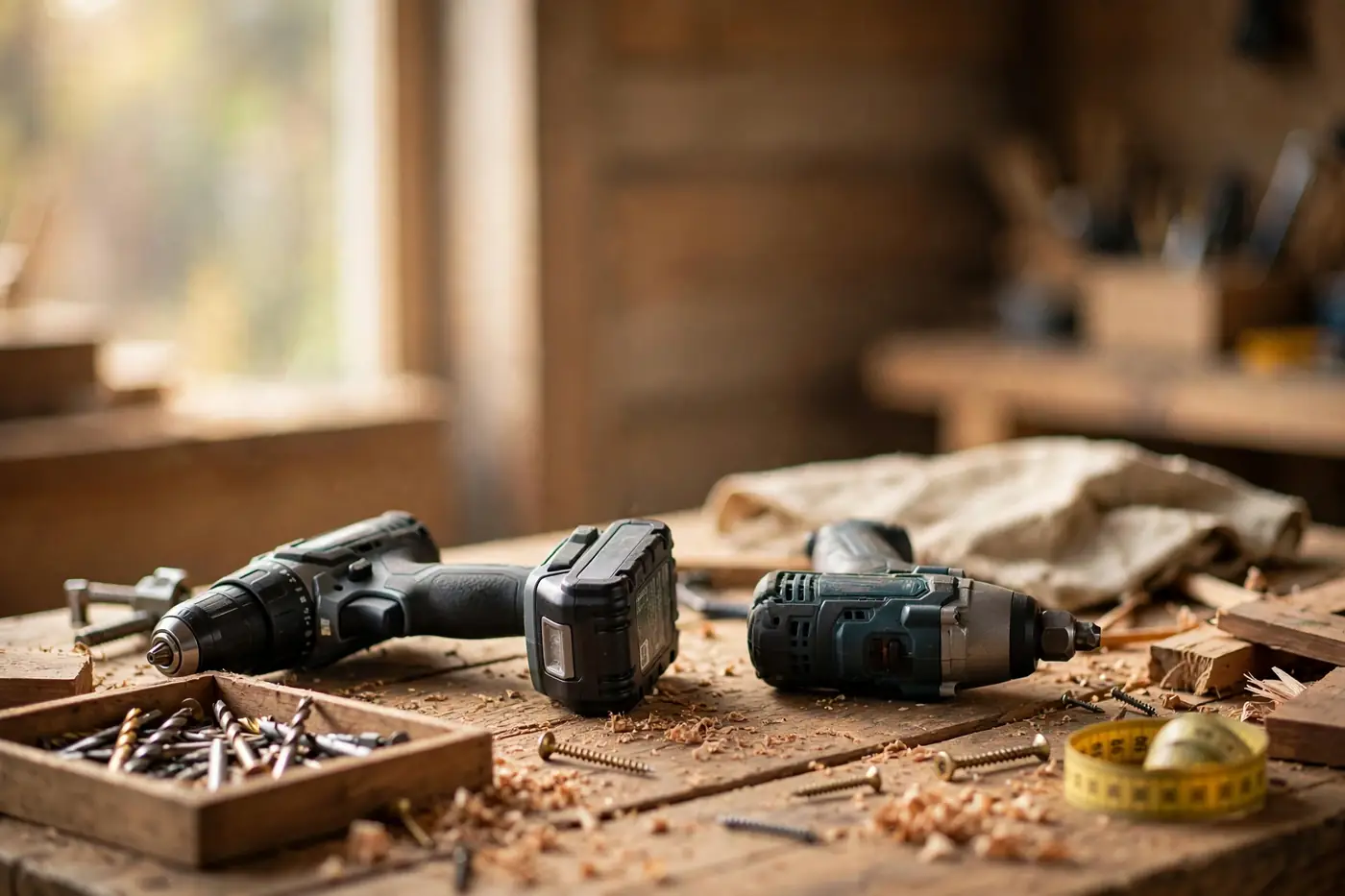
Side by side, a drill and an impact driver look like twins. Same grip, same battery, same trigger. The difference is entirely internal — in how each one delivers force to the bit.
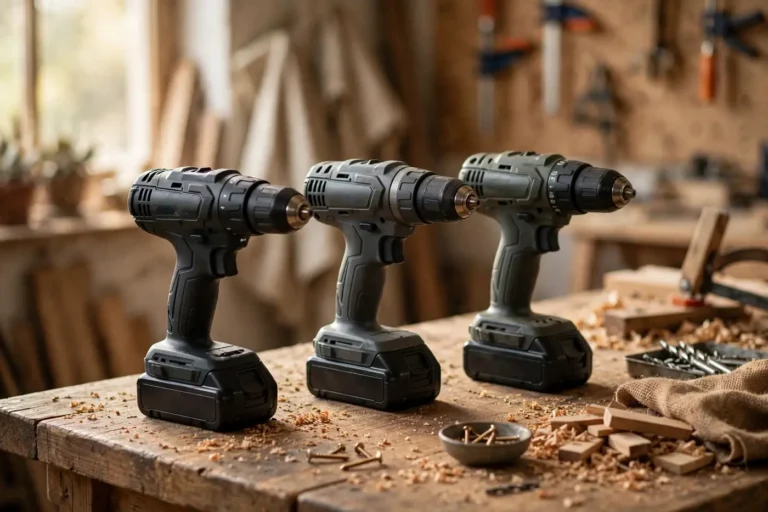
A drill delivers smooth, continuous rotation. When the bit meets resistance, the motor’s torque pushes through it steadily. Most drills include an adjustable clutch — a ring near the chuck that slips at a set torque level — so you can drive small screws without stripping them or sinking them too deep. The chuck itself is the other giveaway: drills typically use a three-jaw chuck that opens and closes to accept round-shank bits of many sizes, usually up to 1/2 inch.
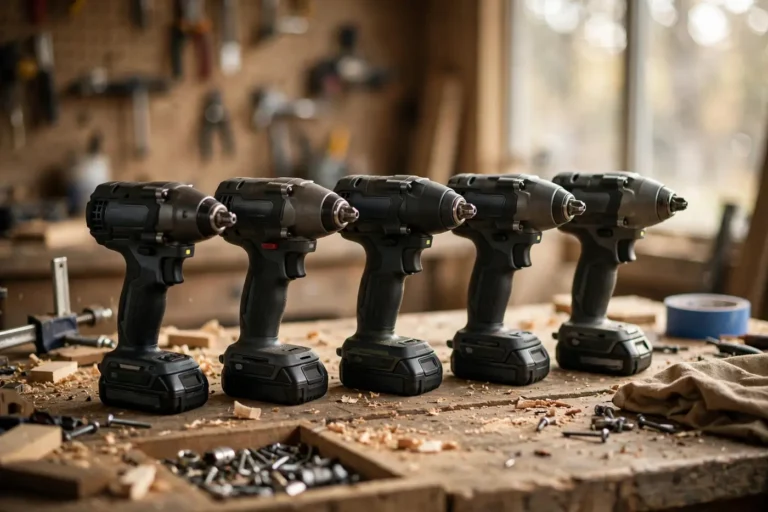
An impact driver works differently. Alongside rotation, it produces rapid hammer-like rotational impacts — thousands per minute — that kick the bit in short bursts. Those bursts let it drive long, thick fasteners without the motor stalling and without twisting the tool out of your grip the way a drill can when it binds. Instead of a chuck, it uses a 1/4-inch hex quick-change collet: you pop hex-shank bits in and out in about a second.
One practical consequence: because the impacts do the work, an impact driver is noticeably shorter and lighter than a drill of the same voltage class, and it’s easier on your wrists when driving dozens of screws. The trade-off is noise — impact drivers are loud, with a sharp rattling bark that surprises first-time users.
The Scenario Test: If You Mostly Do X, Get Y
Specs matter less than your actual projects. Run yourself through these scenarios and see which one fits.
You mostly drill holes: shelving, pilot holes, anchors in drywall or masonry
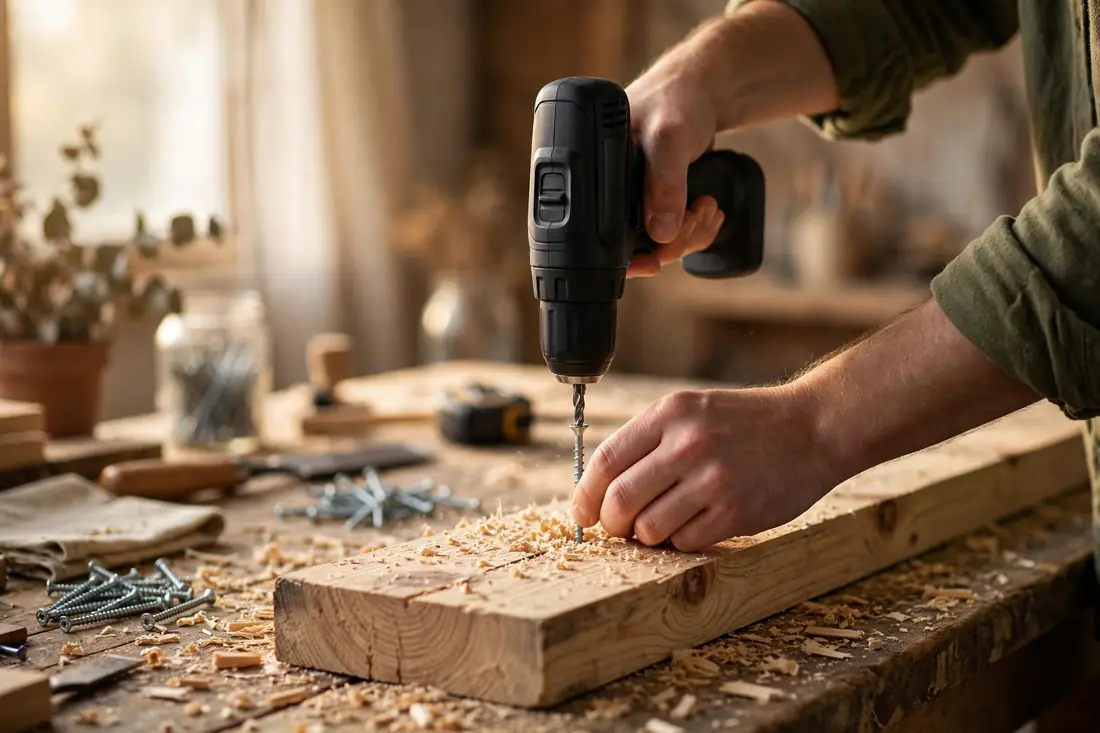
Get the drill. Drilling is the drill’s home turf. A chuck that accepts any round-shank bit — twist bits, brad points, spade bits, hole saws, masonry bits — is something an impact driver’s hex collet simply can’t match without adapters, and adapters add wobble. If your weekends involve hanging shelves, installing curtain rods, running pilot holes for trim, or drilling into brick for anchors, the drill is the tool you’ll reach for every time. Our cordless drill buying guide walks through the features worth paying for.
You build decks, fences, pergolas, or big furniture
Get the impact driver — or both. Outdoor builds mean long structural screws: 3-inch deck screws, ledger bolts, lag screws. A drill can drive them, but you’ll feel it stalling and straining, especially near the end of a long day when batteries are warm. An impact driver eats these fasteners for breakfast — the impacts keep the bit turning and seated instead of camming out of the screw head. If you build one deck a year, you’ll be glad you own one.
You live in an apartment and do small fixes
Get the drill. Assembling flat-pack furniture, hanging picture frames, drilling pilot holes in drywall — a compact drill handles all of it, and its clutch protects you from overdriving screws into soft drywall. An impact driver would be overkill (and your neighbors would notice the noise). A small 12V-class drill is often the perfect apartment tool.
You work on cars, bikes, or machinery
Get the impact driver. Rusted bolts, tight nuts, and stubborn fasteners are where the impact mechanism shines — the hammering action breaks corrosion loose in a way steady torque often can’t. (For serious automotive work there’s also the impact wrench, a heavier cousin, but an impact driver covers light-to-medium duty.)
You want exactly one tool and you’ll do a bit of everything
Get the drill first. This is the “if you only buy one” answer for most homeowners. A drill can drill holes AND drive screws acceptably, which covers the widest range of first-year projects. An impact driver can drive screws brilliantly but drills holes poorly — it can’t hold round-shank bits properly, has no clutch for delicate work, and its impacts crack masonry bits and wander in metal. The drill is the generalist; the impact driver is the specialist.
Can One Replace the Other? The Honest Answer
This is the question every tool aisle shopper asks, and the honest answer is: not really — and certainly not in both directions.
An impact driver cannot replace a drill. It can’t grip round-shank bits in its hex collet, it has no clutch, and its violent impact action is wrong for clean hole drilling — it will wander in wood, shatter carbide in masonry, and give you sloppy holes in metal. Manufacturers sell drill-bit adapters for impact drivers, but they’re a compromise for emergencies, not a way of life.
A drill can partially replace an impact driver, which is why the drill is the recommended first tool. It will drive short screws and medium fasteners just fine. Where it struggles is the heavy end: long lag bolts, dense hardwoods, and high-volume screw driving, where it stalls, drains batteries fast, and strains your wrist when the bit binds.
So the asymmetry is this: a drill covers maybe 80% of what an impact driver does, but an impact driver covers maybe 40% of what a drill does. That’s why the standard workshop advice — the one you’ll hear from carpenters and contractors — is to own both eventually, drill first.
What About Driving Screws With Just a Drill?
Plenty of people do exactly this, and for light work it’s perfectly fine. A few habits make it work better:
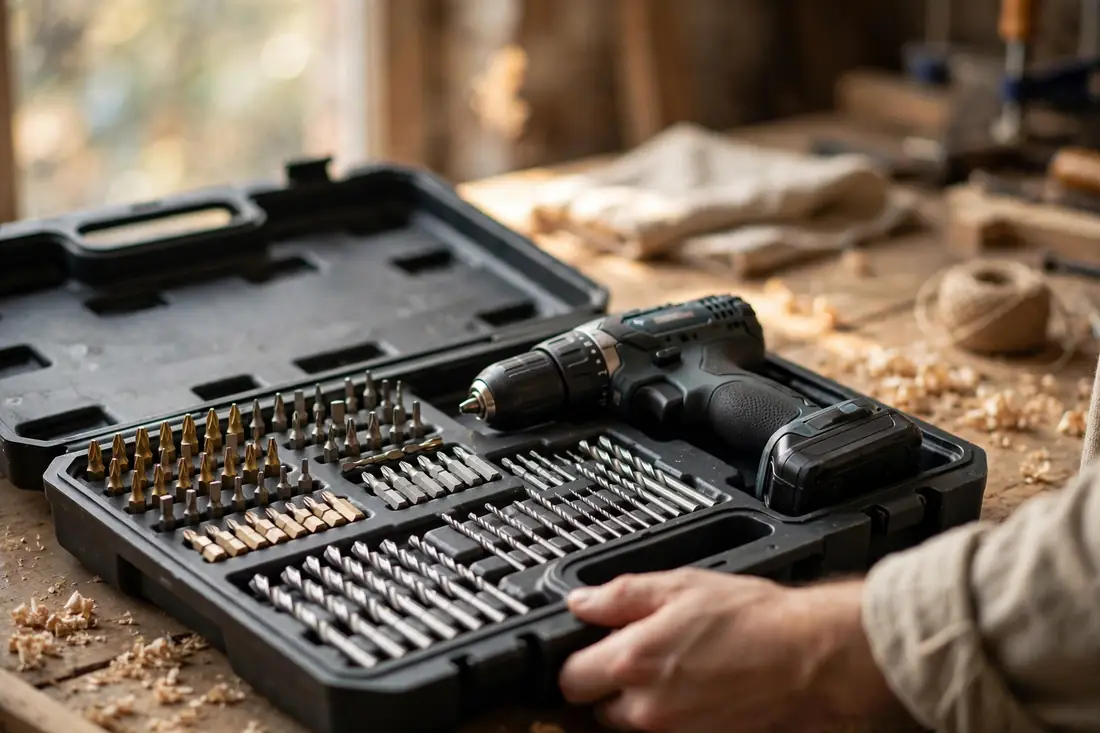
- Use the clutch. Start on a low setting and dial up until the screw seats flush without stripping. That’s what the numbered ring is for.
- Drill pilot holes in hardwoods and near board ends. This is the single biggest difference-maker — it removes most of the resistance that makes drills stall.
- Keep the bit seated. Use the right bit size (a loose-fitting Phillips bit is the main cause of stripped heads), and push firmly while driving.
- Match the speed. Use low gear for big fasteners and high gear for small ones and drilling.
If you find yourself constantly fighting the drill — stalling on every long screw, wrists aching, bits camming out — that’s the tool telling you it’s time for an impact driver. That’s a common reason people end up browsing impact driver picks after their first big project.
When Owning Both Makes Sense
The drill-plus-impact-driver combo is the most common two-tool workshop in America, and brands know it — most sell them as a discounted combo kit sharing one battery platform. Owning both pays off when:
- You drill pilot holes and then drive screws in the same project (drill in one hand, driver in the other — no bit swapping).
- You build anything with structural screws regularly: decks, fences, sheds, raised beds.
- You do automotive or equipment maintenance alongside woodworking.
- You’re assembling furniture with mixed fasteners — the drill’s clutch for delicate screws, the driver for the beefy ones.
If you’re building out a first workshop, the drill comes first, the impact driver comes second, and both should be on the same battery platform so your chargers and batteries work across both tools.
Quick-Buy Checklist
Whichever you buy, a few features are worth checking before you commit:
- Drill: 1/2-inch metal chuck, adjustable clutch with plenty of settings, two speed ranges, and a comfortable grip you’ll hold for an hour.
- Impact driver: 1/4-inch hex quick-change collet, multiple speed/torque modes (a low mode matters for delicate screws), and good balance with a battery attached.
- Both: brushless motor if your budget allows (longer runtime, longer tool life), a battery platform with room to grow, and a kit that includes at least two batteries so one charges while you work.
For a full walkthrough of drill specs — voltage, chuck size, brushless vs. brushed — the buying guide linked earlier in this article covers it in depth. And if you’re narrowing down actual models, our roundup of the best cordless drills compares the current options by use case.
Key Takeaways
- A drill bores holes with steady torque and a versatile chuck; an impact driver drives long fasteners with rapid rotational impacts and a hex collet.
- If you can only buy one, buy the drill — it covers drilling and light driving, the widest range of homeowner projects.
- Buy the impact driver when long structural screws, rusted bolts, or high-volume driving dominate your projects.
- An impact driver can’t truly replace a drill, but a drill can partially cover for an impact driver.
- The eventual goal for most workshops is both, on the same battery platform, bought as a combo kit.
FAQs
Can I drill holes with an impact driver?
Not well. The 1/4-inch hex collet can’t grip standard round-shank drill bits, and the impact action makes for wandering, rough holes. Adapters exist but produce wobbly results. Use a drill for drilling.
Is an impact driver just a more powerful drill?
No — it’s a different mechanism for a different job. It delivers its force as rapid rotational impacts rather than smooth torque, which is ideal for driving fasteners but wrong for drilling clean holes. More power isn’t the point; the right kind of power is.
Why is an impact driver so loud?
The noise is the impact mechanism itself — thousands of tiny hammer strikes per minute. It’s normal, and it’s why ear protection matters more with an impact driver than with a drill.
Do I need the same brand for both tools?
You need the same battery platform, which usually means the same brand’s battery line. Batteries aren’t interchangeable between brands, so pick a platform with both tools (and room for future ones) and stay there.
Can a beginner start with an impact driver?
It’s not ideal as a first tool. The lack of a clutch makes it easy to overdrive or strip screws while you’re learning, and you can’t drill clean holes with it. Start with a drill; add the impact driver when your projects demand it.
Your Next Step
Look at your next three projects and count the holes versus the long screws. More holes and small fasteners? Start with a quality drill. More 3-inch screws and lag bolts? The impact driver earns its place. And if your list has plenty of both — welcome to the two-tool club; buy them on the same battery platform and you’ll wonder how you ever worked with one.