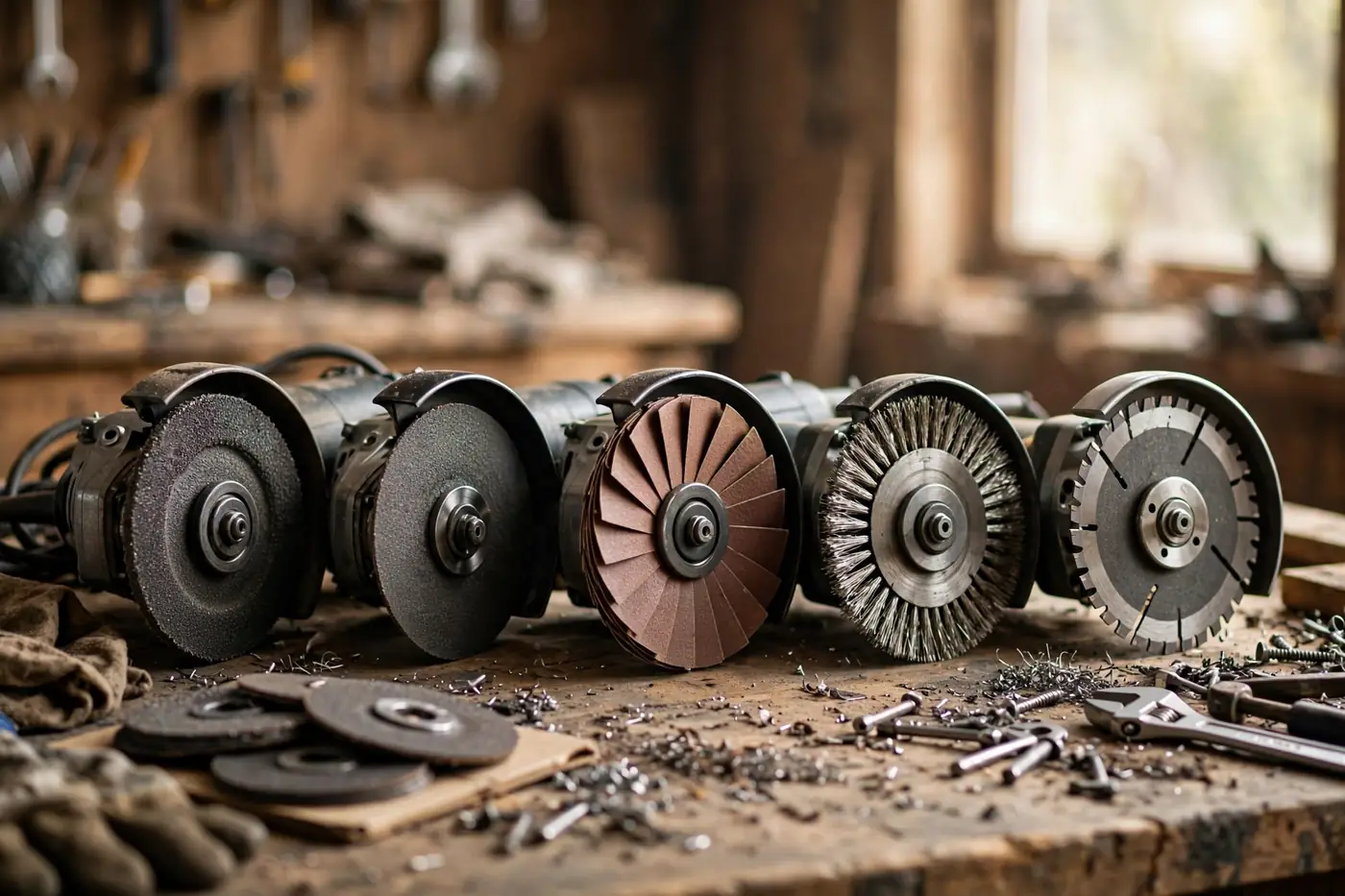
Best Angle Grinders for Metal and Masonry (2026)
Cutting metal or masonry? This research-based roundup sorts angle grinders into DIY metal, masonry, and cordless classes — with a safety-first approach to choosing the right one.
The Short Answer
For most DIY metal work — cutting rebar, grinding welds, sharpening tools — a 4-1/2 inch corded or 18V-class cordless grinder is the right class: nimble, affordable, with discs everywhere. Masonry work wants a larger disc and more sustained power. Whatever class you choose, the guard stays on and the safety gear goes on first.
Key Takeaways
- The 4-1/2 inch class is the default for DIY: the widest disc selection, the most manageable size, and the lowest cost.
- Masonry and thick steel favor larger discs and more sustained power — match the grinder to the material.
- Cordless grinders offer real freedom but drain batteries fast; corded still rules for sustained grinding sessions.
- The disc matters as much as the grinder — cutting, grinding, and flap discs are different tools.
- Angle grinders demand respect: guard on, eye and face protection, and proper technique are non-negotiable.
In This Guide
How We Picked: Our Methodology
A note on how this roundup was put together. Our picks are research-based: we compiled them from manufacturer-published specifications, official product documentation, and widely reported user feedback from DIYers and metalworkers — not from hands-on testing. We have not personally hands-on tested every model discussed here, and we name no specific model as “tested by us.”
Specifications and prices change frequently. Before buying, verify current specs, kit contents, and pricing on the manufacturer’s official page and your retailer’s listing. The classes below are designed to help you evaluate any angle grinder on the market.
Best Angle Grinder for DIY Metal Work
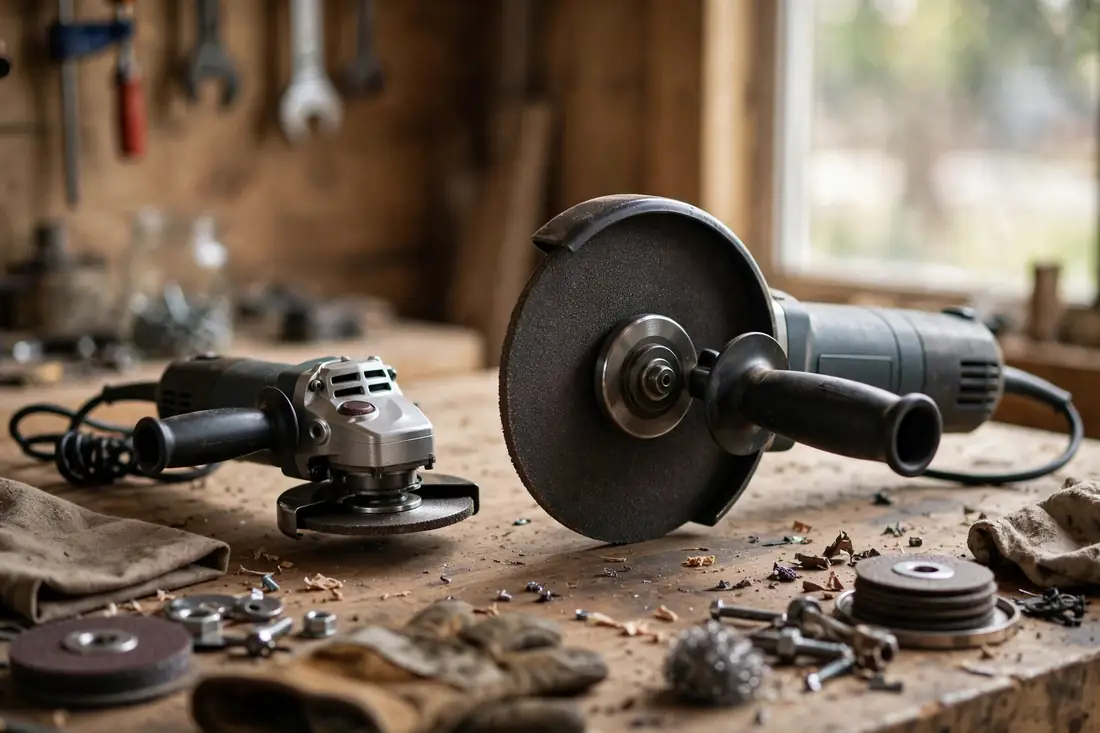
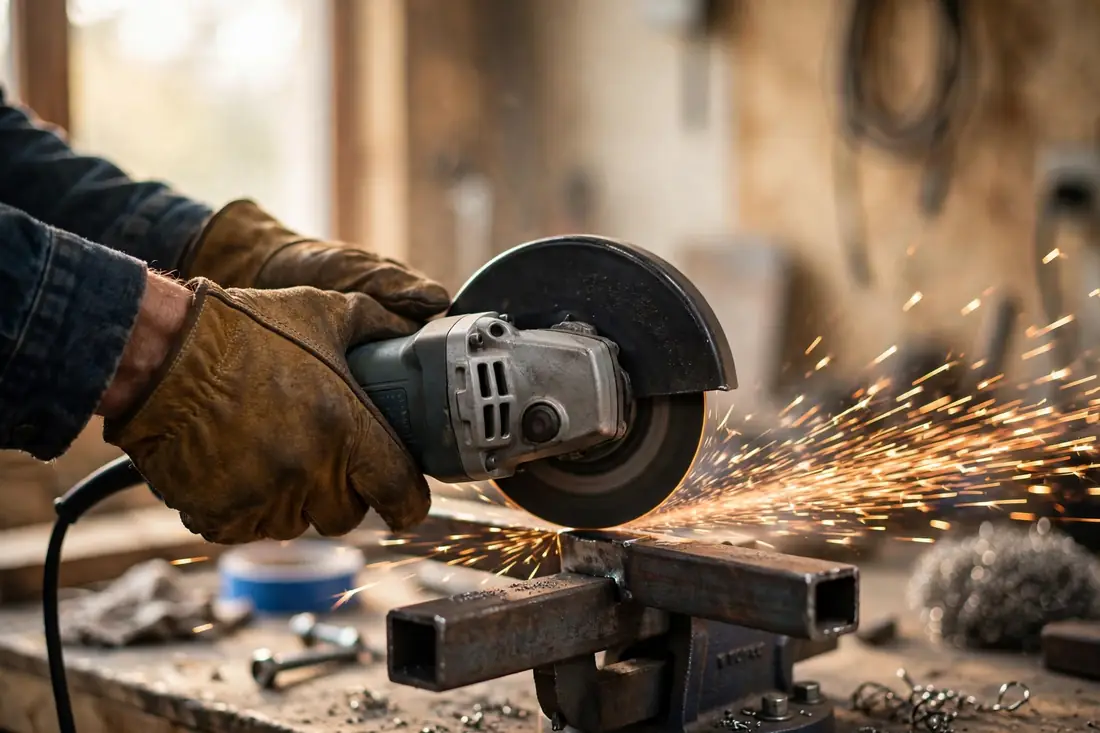
The 4-1/2 inch class is the workhorse of DIY metal work: cutting threaded rod and rebar, trimming sheet metal, grinding down welds, sharpening mower blades and axes, and cleaning rust off old steel. It is the size with the deepest bench of available discs and accessories, and the friendliest price point. Use a firm two-handed grip with the guard fitted and eye/face protection on — every time.
What to look for: a paddle switch or slide switch you can operate comfortably with gloves on — this is personal preference, so note which style feels natural. Tool-free or easy disc changes save real time when you switch between cutting and grinding discs mid-project. A brushless motor is worth considering in this class because grinders are hard on motors; the efficiency and durability gains are tangible. Spindle lock quality matters more than it sounds — a positive, easy-to-engage lock makes disc swaps quick and safe.
Trade-offs: a 4-1/2 inch disc has limited cutting depth — roughly an inch of practical cutting depth — so thick steel plate and large masonry units are beyond its comfortable range. Sustained heavy grinding will overheat smaller motors and drain cordless batteries fast. It is a versatile class, not an unlimited one: respect its limits and it will serve you for years.
Best for: general metal fabrication in the home shop, weld cleanup, rust removal, tool sharpening, and light cutting tasks. Our grinder buying guide covers disc selection in depth — the right disc transforms what this class can do.
Best Angle Grinder for Masonry
Masonry work — cutting brick, block, pavers, and stone — asks different things of a grinder: sustained power under load, dust tolerance, and cutting depth that a 4-1/2 inch disc cannot always provide. This class steps up to larger discs (commonly 5 inch, 6 inch, or 7 inch) and motors built to run hard for longer stretches.
What to look for: a larger disc size matched to your cutting depth needs — measure the thickest material you will cut and choose accordingly. Sustained power matters more than peak numbers here; masonry cutting is slow, dusty, grinding work, and a motor that fades under load turns a chore into an ordeal. Dust management features (sealed switches, dust-ejection paths) extend tool life meaningfully in this environment. For wet-cutting setups, check compatibility with water feed attachments if you plan to control dust that way.
Trade-offs: larger grinders are heavier, more expensive, and more intimidating — the bigger the disc, the more energy it carries and the more serious a kickback or disc failure becomes. Disc selection narrows as size increases, and prices per disc climb. For occasional masonry cuts, a 4-1/2 inch grinder with a diamond blade and patience often suffices; step up to this class when masonry is a regular part of your work.
Best for: tuckpointing, cutting pavers and block, scoring brick for clean breaks, and any project where masonry cutting is the main event rather than a side task. Pair it with proper dust protection — silica dust from masonry is a genuine health hazard, not just a nuisance.
Best Cordless Angle Grinder for Convenience
The cordless class trades unlimited runtime for freedom: cutting fence posts at the back of the property, trimming metal on a roof, or working anywhere the extension cord does not reach. Modern 18V-class cordless grinders — especially those designed around high-demand batteries — deliver credible cutting and grinding performance for intermittent work.
What to look for: platform first, as always: the grinder should share batteries with tools you already own. Prioritize models designed for high-capacity packs — a grinder is among the hungriest cordless tools, and undersized batteries will frustrate you. An electronic brake that stops the disc quickly is a meaningful safety feature on a cordless grinder. Check the guard adjustability and disc-change system, since you will be swapping discs often. Some cordless grinders include anti-kickback or restart protection electronics; these are worth having.
Trade-offs: runtime is the headline compromise. Sustained grinding — weld cleanup across a whole project, for example — drains even large batteries quickly, and the tool slows as voltage sags. Cordless grinders also cost more than corded equivalents once batteries are counted, and the battery adds weight at the back of the tool. For shop work next to an outlet, corded remains the rational choice.
Best for: remote cutting tasks, quick cuts away from the shop, and DIYers already invested in a strong battery platform who want a grinder without another cord. For the fundamentals of disc types and technique, our blade basics article (written for saw blades, but the abrasive-disc logic rhymes) is a useful companion read.
Class-by-Class Comparison
Class-level characteristics of each angle grinder category. Individual models vary — verify the spec sheet before buying.
| Criterion | DIY Metal Class | Masonry Class | Cordless Convenience Class |
|---|---|---|---|
| Typical disc size | 4-1/2 in | 5 in, 6 in, or 7 in | 4-1/2 in or 5 in common |
| Power source | Corded common; cordless options | Corded common | Battery (platform-dependent) |
| Cutting depth | Shallow (~1 in practical) | Deeper, size-dependent | Shallow to moderate |
| Sustained power | Moderate | High | Limited by battery |
| Weight class | Lightest | Heaviest | Mid-weight (battery adds heft) |
| Best workload | General metal DIY | Brick, block, pavers, stone | Cuts away from outlets |
A Safety Note Before You Buy
Angle grinders injure more DIYers than almost any other handheld power tool, and nearly every injury traces back to a skipped precaution. This is not fear-mongering — it is the reality of a tool that spins an abrasive disc at thousands of RPM inches from your hands. Read our full safety rules before your first use, and internalize these non-negotiables:
- The guard stays on. Removing the guard for “better visibility” is the single most common precursor to serious grinder injuries. Adjust it; never remove it.
- Eye and face protection, every time. Safety glasses plus a face shield for grinding — sparks and disc fragments do not negotiate.
- Match the disc to the task and the speed rating. Never mount a disc rated below the grinder’s speed, never use a cutting disc for grinding (or vice versa), and inspect every disc for cracks before mounting.
- Secure the workpiece. Clamp it. A grinder grabbing an unsecured workpiece turns the workpiece into a projectile.
- Respect kickback. Keep a firm two-handed grip, position your body out of the disc’s plane, and let the tool do the work — forcing it invites binding.
- Dust protection for masonry. Silica dust from cutting brick, block, and concrete is a serious respiratory hazard. Use a respirator rated for fine dust, and consider wet cutting or dust extraction.
No grinder is “safe enough” to skip these. The right class choice makes the work easier; only good habits make it safe.
Frequently Asked Questions
What size angle grinder should a DIYer buy?
For most DIYers, 4-1/2 inch. It handles the vast majority of metal cutting, grinding, and sharpening tasks, discs are available everywhere at reasonable prices, and the tool is manageable with one or two hands. Step up to larger sizes only when your material — thick masonry or heavy plate — demands the cutting depth.
Can I cut wood with an angle grinder?
You should not use standard abrasive or toothed wood-cutting discs on an angle grinder — the combination is notorious for kickback injuries. If you need to shape wood, use a tool designed for it (a jigsaw, circular saw, or a proper carving attachment used exactly as instructed). The grinder is a metal and masonry tool; keep it that way.
How long do grinding discs last?
It depends on the material, pressure, and disc quality — there is no fixed lifespan. Replace a disc when it is visibly worn down, glazed, or cutting slowly despite correct technique. Never use a cracked or damaged disc, and never run a disc past its rated speed. When in doubt, swap it out: discs are cheap, injuries are not.
Corded or cordless angle grinder?
Corded for sustained shop work — unlimited runtime and lower cost. Cordless for remote cuts and quick jobs away from outlets, provided you are on a strong battery platform with high-capacity packs. Many DIYers eventually own both: corded in the shop, cordless for the field.
What is the difference between a cutting disc and a grinding disc?
A cutting disc is thin and designed to slice through material; a grinding disc is thick and designed to remove material from a surface. Using a thin cutting disc for grinding side-loads it and can shatter it — one of the classic grinder mistakes. Flap discs sit in between, blending grinding and finishing. Our grinder buying guide breaks down the full disc system.
Your Next Step
Match the class to your material: 4-1/2 inch for general metal DIY, larger for regular masonry, cordless for remote work. Shortlist models from established manufacturers, compare switch style, disc-change systems, and kit contents, then verify specs and prices on the official pages. Before the first cut, review our safety rules article, buy the right discs for your material, and put the guard and the gear on — every single time.