Brushless vs. Brushed Motors: What’s the Real Difference?
Brushless motors are marketed as a must-have upgrade — but what do they actually change? A plain-English look at how both motor types work and when each makes sense.
Walk down any power tool aisle and “brushless” is on half the boxes, next to a higher price. It’s sold as the superior choice — but what changes about the tool in your hand? Here’s the plain-English version: how each motor works, where the difference shows up in real work, and when the cheaper brushed tool is the smarter buy.
On This Page
- How Brushed Motors Work
- How Brushless Motors Work
- The Practical Differences
- When Brushed Is Still Fine
- When Brushless Earns Its Price
- The Verdict
- Key Takeaways
- Frequently Asked Questions
How Brushed Motors Work
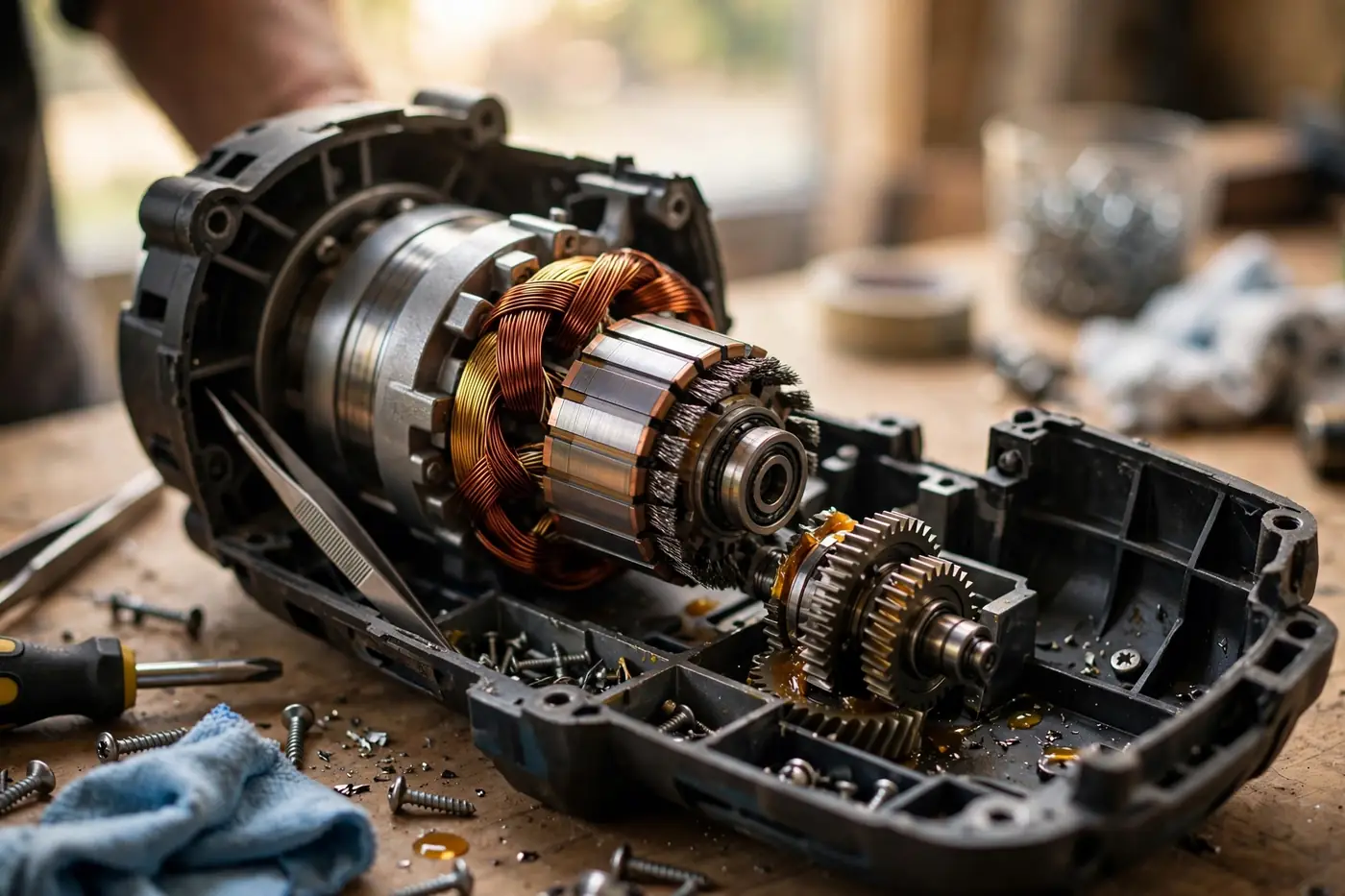
A brushed motor is the older, simpler design — the same basic technology that’s been spinning power tools for decades. Inside, there’s a rotating part (the armature, wrapped in copper windings) and a stationary part (magnets). To make the armature spin, electricity has to reach its windings while it’s turning — and that’s the job of the brushes: small blocks of carbon that press against a rotating contact (the commutator), switching the current’s direction as the motor turns.
It works, and it’s cheap to build. The catch is friction: those carbon brushes physically rub against the commutator the entire time the motor runs. That rubbing creates heat, wastes a slice of the battery’s energy, and slowly wears the brushes down. Given enough years of hard use, the brushes wear out — though on many modern tools they’re replaceable, and on lightly used DIY tools they may effectively last the life of the tool.
Think of it like an old record player needle: physical contact gets the job done, but contact means wear, heat, and lost efficiency.
How Brushless Motors Work
A brushless motor flips the design around. The copper windings stay stationary and the magnets rotate — and instead of physical brushes switching the current, a small electronic controller does the switching, energizing the windings in sequence with precise timing.
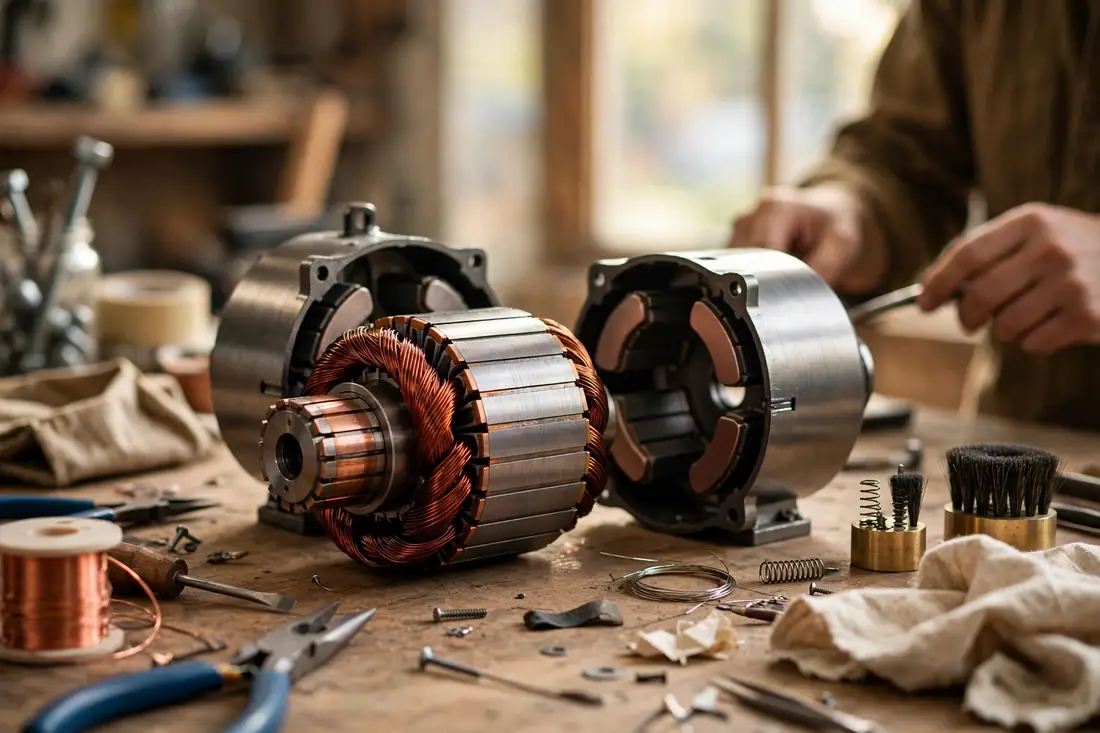
No rubbing parts means no brush friction, no brush wear, and no energy lost to that contact. The electronic controller brings a bonus, too: it can sense the load and adjust power delivery intelligently — feeding full power when the bit bites into a knot, backing off when it’s spinning freely. That “smart” power delivery is a big part of why brushless tools feel more responsive.
The trade-off is complexity and cost. The controller electronics add manufacturing expense, which is why brushless tools carry a premium. It’s proven, mature technology at this point — not experimental — but you’re paying for the electronics every time.
The Practical Differences
Forget the engineering for a moment. Here’s what changes in your actual work:
| Factor | Brushed | Brushless |
|---|---|---|
| Runtime per charge | Shorter — some energy lost to brush friction and heat | Longer — typically noticeably more work per battery |
| Power delivery | Fixed; power output doesn’t adapt to load | Adaptive; electronics match power to the load |
| Heat buildup | Runs hotter under sustained load | Runs cooler, handles long sessions better |
| Motor maintenance | Brushes eventually wear (replaceable on many tools) | No brushes to wear out |
| Size and weight | Slightly bulkier for equivalent power | Often more compact for the same output |
| Upfront cost | Lower | Higher — you’re paying for the electronics |
| Durability | Proven; decades of track record | Proven; mature technology, fewer wear parts |
The headline benefits — longer runtime, cooler running, no brush wear — are real, not marketing fluff. But notice the shape of them: they matter most when the tool works hard and often. A drill that runs eight hours a day on a jobsite banks those efficiency gains daily. A drill that hangs pictures twice a month barely notices them.
One more practical note: brushless efficiency stretches your batteries further, which makes battery care habits pay off even more — a well-kept pack on a brushless tool covers a surprising amount of work between charges.
When Brushed Is Still Fine
Brushless isn’t mandatory, and the tool industry would prefer you forget that. A brushed tool is a perfectly sensible buy when:
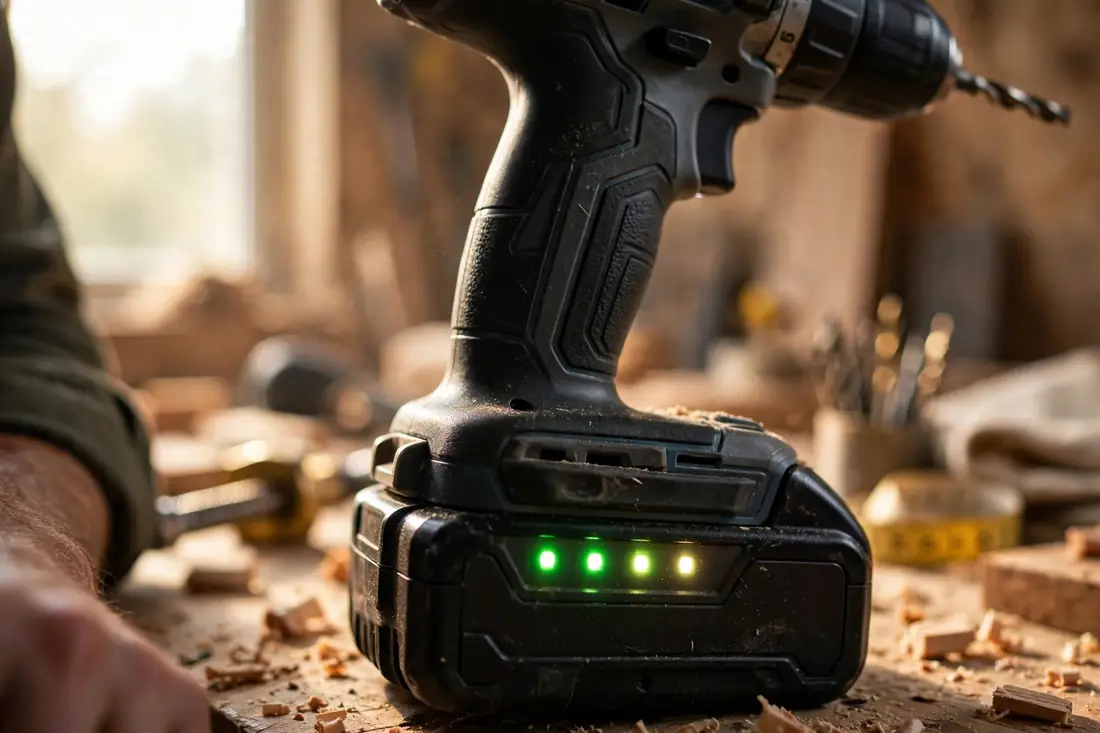
- You use the tool occasionally. A few hours a month of drilling, driving, or sanding won’t wear brushes meaningfully or make runtime differences matter. The brushed tool does the same work — it just does it a little less efficiently.
- Budget is the deciding factor. If the choice is between a quality brushed tool and a cheap no-name brushless one, take the quality brushed tool every time. Build quality beats motor type.
- It’s a rarely used specialty tool. That biscuit joiner or detail sander you pull out twice a year? Brushed is fine. Save the premium for the tools you touch weekly.
- It’s corded. On a corded tool, runtime per charge doesn’t exist and heat is less of an issue — two of brushless’s biggest advantages simply don’t apply. Plenty of excellent corded tools are brushed and nobody minds.
There’s no shame in brushed. It’s the technology that built a century of power tools, and for light, occasional use it’s every bit as capable of making the cut or driving the screw.
When Brushless Earns Its Price
- Daily or heavy use. If the tool earns its keep — jobsite work, serious hobby hours, running a small shop — the runtime gains, cooler operation, and lack of brush maintenance compound into real money and time saved.
- Battery-powered tools you rely on. On cordless tools, efficiency is runtime, and runtime is the ability to finish the job. Brushless stretches every amp-hour further — meaningful when you’re working far from the charger. It also factors into the broader platform decision: our comparison of battery platforms covers how voltage class and motor type interact.
- Demanding applications. Big hole saws, long rips, grinding — jobs where the motor works near its limit. Brushless tools handle sustained load better and the adaptive power delivery is genuinely noticeable when the work gets tough.
- Tools you’ll keep for a decade. No brushes to replace, less heat stress on components — over a long ownership horizon, the premium often pays for itself in longevity alone.
The Verdict
Brushless is the better motor technology — that’s not really debatable. The question is whether it’s the better purchase for you, and that depends entirely on how hard the tool will work. Heavy, frequent, cordless use: brushless earns its premium many times over. Occasional, light, or corded use: a good brushed tool at a good price is the smarter buy, and the money you save can go toward the next tool on your list.
The worst outcome isn’t picking the “wrong” motor type — it’s overpaying for brushless on a tool you’ll barely use, or buying a flimsy tool just because the box says brushless. Judge the whole tool: build quality, ergonomics, battery platform, and warranty first; motor type second. When in doubt, match the motor to the workload, not the marketing.
Key Takeaways
- Brushed motors use physical carbon brushes that create friction, heat, and gradual wear; brushless motors replace them with electronic control — no contact, no brush wear, adaptive power.
- Real-world brushless advantages: longer runtime per charge, cooler running under load, slightly more compact size, no brush maintenance.
- The advantages matter most with heavy, frequent, cordless use — and matter least with occasional, light, or corded use.
- A quality brushed tool beats a cheap brushless one every time. Judge the whole tool, not just the motor label.
- On corded tools, two of brushless’s biggest advantages (runtime, heat) barely apply — don’t pay the premium reflexively.
Frequently Asked Questions
Do brushless tools have more power than brushed?
Not automatically. Brushless motors are more efficient, which often translates to better performance from the same battery — but a well-built brushed tool can out-muscle a cheap brushless one. Compare the whole tool, not just the motor badge.
How long do brushed motor brushes last?
It depends entirely on use. In occasional DIY service, brushes can last many years — often the life of the tool. In daily professional use, they’re a wear item that eventually needs replacement, and many tools are designed so brushes can be swapped.
Can you replace brushes yourself?
On many tools, yes — brushes are often accessible under small caps on the motor housing and replacements are inexpensive. Check your tool’s manual; some designs make it a five-minute job, others require more disassembly.
Is brushless worth it on a drill I’ll use twice a month?
Honestly? Probably not on efficiency grounds alone. The runtime and wear advantages won’t meaningfully materialize at that usage level. Buy brushless if the price gap is small or you just want the nicer tool — not because you need the technology.
Do brushless tools need different batteries?
No. Brushless and brushed tools from the same brand and voltage platform use the same batteries interchangeably. The motor type doesn’t change the battery system.
Are there downsides to brushless?
Cost is the main one. The electronics also mean that if the controller fails out of warranty, repair can be pricier than swapping brushes — though such failures are uncommon. For most buyers, price is the only real drawback.
Will brushed tools disappear entirely?
Unlikely anytime soon. Brushed motors remain cheaper to manufacture, which keeps budget tool lines viable, and on corded tools the efficiency advantage of brushless barely matters — so there’s little pressure to convert. Expect brushless to keep spreading across cordless pro and mid-range lines while brushed holds the budget and corded corners of the market for years to come.
Shopping for your next tool with this knowledge in hand? Start with the purchase where it matters most — our drill buying guide walks through matching motor type, voltage, and features to the work you’ll actually do.