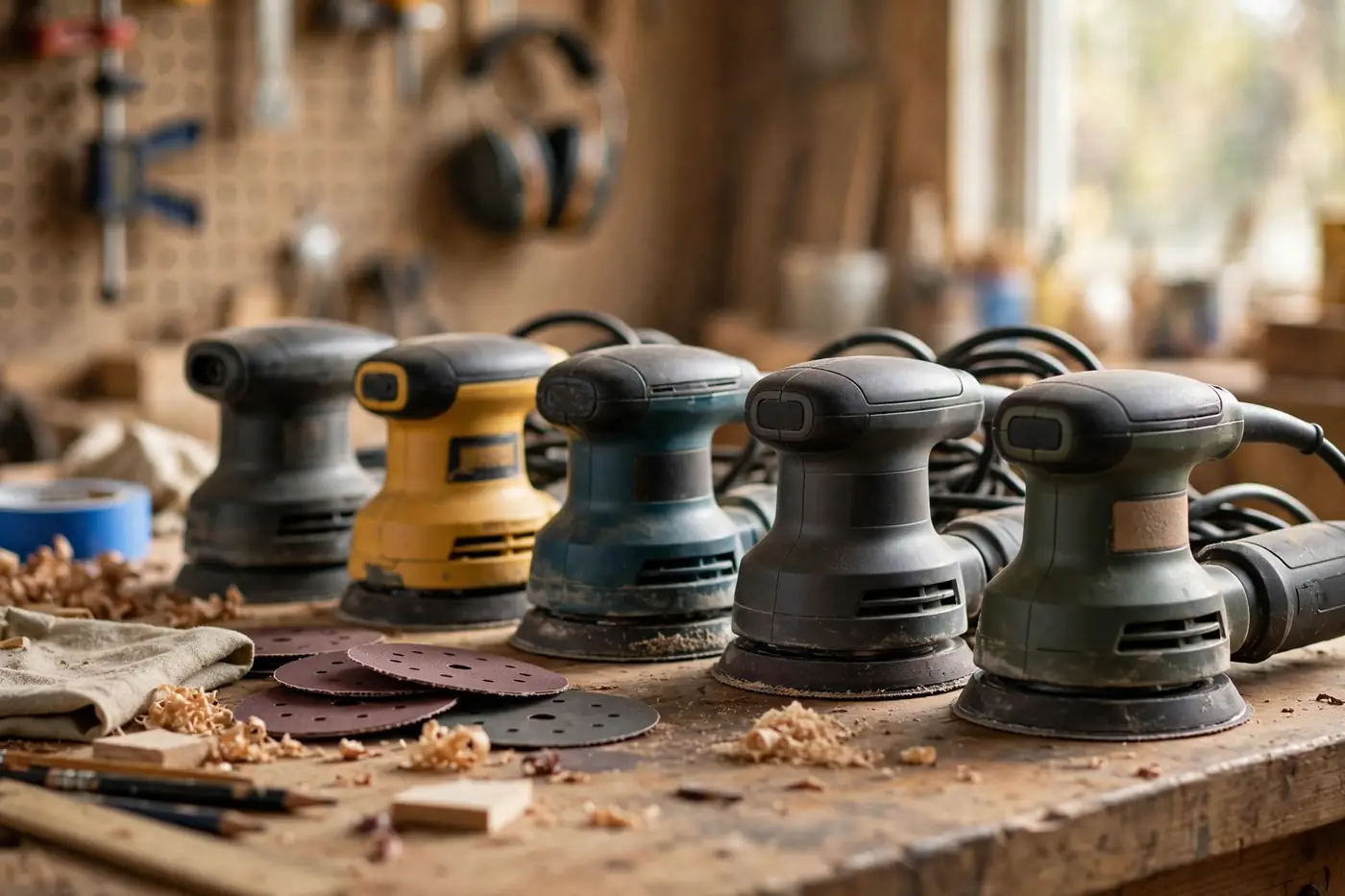
Best Random Orbital Sanders for a Swirl-Free Finish (2026)
Want furniture-smooth finishes without swirl marks? This research-based roundup sorts random orbital sanders into furniture, one-sander, and dust-collection classes for a flawless finish.
The Short Answer
A random orbital sander is the safest path to a swirl-free finish: its pad spins and oscillates, sanding evenly without the circular scratches of a rushed job. For furniture, prioritize dust collection and comfortable vibration control; for a one-sander shop, pick a versatile 5-inch model on a platform you own. Technique and grit progression matter as much as the tool.
Key Takeaways
- The random orbit action is what prevents swirl marks — it is the defining feature to shop for.
- Dust collection is not a luxury: it keeps the abrasive cutting, extends disc life, and protects your lungs.
- A 5-inch pad is the versatile standard; larger pads cover ground faster but are harder to control on detail work.
- Variable speed gives you control for delicate finishes and aggressive stock removal alike.
- Grit progression and technique matter as much as the sander — no tool fixes skipped grits.
In This Guide
How We Picked: Our Methodology
A note on how this roundup was put together. Our picks are research-based: we compiled them from manufacturer-published specifications, official product documentation, and widely reported user feedback from woodworkers and DIYers — not from hands-on testing in a shop. We have not personally hands-on tested every model discussed here, and we name no specific model as “tested by us.”
Specifications and prices change frequently. Before buying, verify current specs, kit contents, and pricing on the manufacturer’s official page and your retailer’s listing. The classes below are designed to help you evaluate any random orbital sander on the market.
Best Sander for Furniture and Fine Finishing
Furniture work is where random orbital sanders prove their worth: tabletops, chairs, cabinets, and boxes where the finish is the whole point. This class prioritizes finish quality and control — smooth vibration characteristics, effective dust extraction at the pad, and speed control fine enough for delicate final passes.

What to look for: a 5-inch pad (the standard for furniture-scale work), variable speed with a genuinely useful low end, and a dust port that actually connects to your vacuum or dust extractor — onboard dust bags catch the big stuff, but a hose connection is what keeps fine dust out of the air and off the finish. Low vibration matters more here than anywhere: you will hold this sander for long finishing sessions, and numb hands make for uneven pressure and worse finishes. Hook-and-loop pad systems are standard; check that replacement pads and quality discs are readily available for the model you choose.
Trade-offs: finish-oriented sanders are rarely the fastest at stock removal — they are tuned for control, not aggression. They also tend to cost more than basic models, and the best dust extraction requires a vacuum or extractor you may not own yet. If your work is mostly rough carpentry rather than furniture, this class is more refinement than you need.
Best for: furniture builders, cabinet refinishers, and anyone whose projects end with stain or clear coat. When the sander is put away, keep your growing tool collection organized — our guide to storing your tools has practical ideas for small workshops.
Best One-Sander Shop Workhorse
Most home workshops need exactly one sander, and it has to do a bit of everything: smoothing rough lumber, prepping surfaces for paint, easing edges, and the occasional furniture project. The one-sander class is defined by versatility — enough aggression for stock removal, enough finesse for finish work, and durability for regular use.
What to look for: a 5-inch random orbital with variable speed is the default answer, and it is the default for good reason — discs are universal, the size handles both broad panels and smaller parts, and the speed range covers rough shaping to fine finishing. Corded models offer unlimited runtime for long sanding sessions; cordless models on an 18V-class platform you already own add convenience for quick jobs and outdoor work. A sturdy build matters: a one-sander shop runs its sander hard, and flimsy tools show it. Check that the pad brake works properly — a pad that keeps spinning after you lift the sander will gouge your workpiece.
Trade-offs: a generalist is never the best at the extremes. It will not remove stock as fast as a belt sander, nor finish as delicately as a premium finish sander. Tight corners and profiles are also out of reach — random orbitals need flat-ish surfaces, and you will still need hand sanding or a detail sander for the fiddly bits. Accept the compromise: one good generalist beats two cheap specialists for most shops.
Best for: general DIY workshops, homeowners refinishing rooms, and anyone building their first beginner workshop kit — the random orbital sander earns its place on every starter list.
Best Sander for Dust Collection Priority
Sanding dust is the unglamorous reality of the craft: fine, pervasive, and genuinely unhealthy to breathe. This class is for anyone who sands a lot, sands indoors, or shares their space with family — the sander is chosen first and foremost for how little dust escapes into the room.
What to look for: a sealed dust path from pad to port, a port sized for standard vacuum hoses (with adapters available for your specific vacuum), and a pad hole pattern that matches widely available multi-hole discs — dust extraction only works when the disc holes align with the pad holes. Sanders designed around dust extraction often pair with specific extractor systems; check compatibility before assuming your shop vacuum will connect cleanly. Beyond the tool, the system matters: a HEPA-filtered vacuum or a dedicated dust extractor transforms what “dust collection” means in practice.
Trade-offs: extraction-optimized sanders and their companion vacuums cost more, and dragging a hose changes how the sander handles — overhead and vertical sanding get more awkward. Multi-hole discs can cost slightly more than basic discs, though the longer abrasive life from keeping dust clear of the cutting surface partly offsets it. It is an investment in health and cleanliness, not in speed.
Best for: indoor workshops, apartment-adjacent garages, anyone with respiratory sensitivities, and woodworkers who finish in the same space where they sand. Review our workshop safety guidance for the full picture on dust, noise, and protective gear.
Class-by-Class Comparison
Class-level characteristics of each random orbital sander category. Individual models vary — verify the spec sheet before buying.
| Criterion | Furniture/Finishing Class | One-Sander Workhorse Class | Dust Collection Class |
|---|---|---|---|
| Pad size | Typically 5 in | Typically 5 in | Typically 5 in (some 6 in) |
| Speed control | Variable, fine low end | Variable speed standard | Variable speed common |
| Vibration control | Priority feature | Adequate | Varies |
| Dust extraction | Good; hose connection valued | Functional onboard or port | Optimized; system-matched |
| Power source | Corded common | Corded or cordless | Corded common |
| Stock removal pace | Moderate | Moderate to aggressive | Moderate |
| Power source | Corded common | Corded or cordless | Corded common |
| Best workload | Furniture, fine finishing | General workshop sanding | High-volume or indoor sanding |
How to Choose a Random Orbital Sander
Start with what you sand most. Furniture and finish work points to the finishing class; general home improvement points to the workhorse; heavy sanding volume or indoor-only work points to dust-collection priority. The sander that matches your dominant workload will feel right 90 percent of the time, and the other 10 percent is what technique is for.
Next, plan the dust system, not just the sander. A sander with a great dust port and no vacuum is a missed opportunity; a basic sander hooked to a good vacuum often outperforms a premium sander with a clogged dust bag. If you sand indoors, budget the vacuum or extractor as part of the purchase — it is the single biggest upgrade to both your finishes and your air quality.
Then consider corded versus cordless. Sanding sessions run long, and runtime matters: corded sanders never quit mid-panel. Cordless makes sense for quick touch-ups, outdoor projects, and shops where the cord is a constant nuisance — but only on a battery platform you already own, with high-capacity packs. For a primary sander, corded remains the pragmatic default.
Finally, respect the grit progression. No sander — at any price — produces a swirl-free finish if you skip grits. Work through the sequence (coarse to fine, without jumping), let the sander’s weight do the work instead of pressing down, keep the sander moving, and change discs when they dull. Most “sander problems” are technique problems wearing a tool’s name tag.
Frequently Asked Questions
What is the difference between a random orbital sander and an orbital finishing sander?
A random orbital sander’s pad both spins and oscillates in random patterns, which prevents the swirl marks that a standard orbital (sheet) sander — whose pad moves in small fixed orbits — can leave. Random orbitals remove material faster and finish more evenly, which is why they are the general recommendation. Sheet sanders still have a niche: cheap sandpaper and square pads that reach into corners.
Why am I getting swirl marks?
The usual suspects: pressing too hard, skipping grits, a worn or clogged disc, or tilting the sander so one edge digs in. Fix the technique before blaming the tool — light pressure, full grit progression, fresh discs, and a flat pad solve the vast majority of swirl problems. Dust extraction helps too, since trapped dust particles score the surface.
What grit sequence should I use?
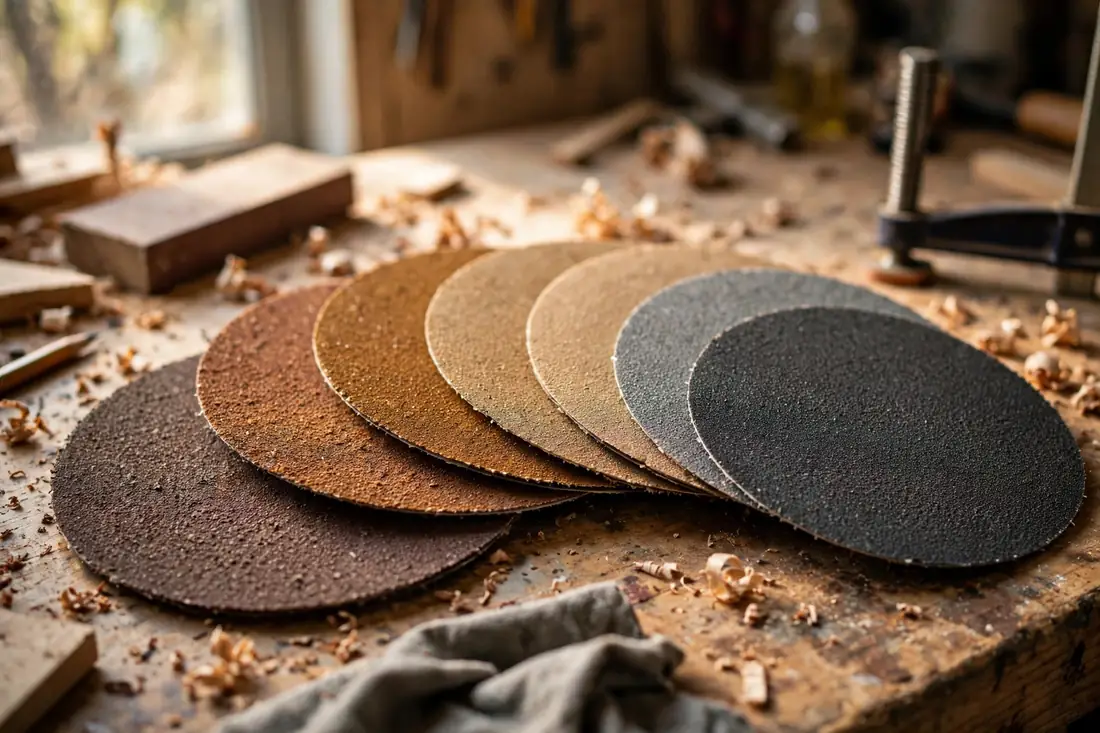
A common progression for raw wood is 80 → 120 → 180 → 220, sanding with each grit until the scratches from the previous one are gone. Do not skip steps — each grit’s job is to remove the previous grit’s scratches. For finish sanding between coats, 220 and finer are typical. The exact sequence varies by project, but the principle never changes: never jump.
Do I need a dust extractor, or is the dust bag enough?
The onboard dust bag catches the coarse stuff and is fine for occasional outdoor sanding. For regular indoor sanding, a vacuum or extractor connection is meaningfully better — for your lungs, your finishes, and your cleanup time. If you sand weekly in an enclosed shop, treat dust extraction as essential equipment, and see our workshop safety article for the full guidance.
How long do sanding discs last?
It depends on the wood, the grit, and the pressure — softwood clogs discs faster, and pressing hard kills them quicker. Replace a disc when it cuts slowly, leaves uneven scratches, or looks glazed and loaded with dust. Fresh discs are cheap; fighting a dead disc wastes time and risks burning the wood.
Your Next Step
Pick your class based on your dominant sanding workload, then shortlist sanders from established manufacturers and compare vibration reports, dust-port compatibility with your vacuum, and disc availability. Verify specs and prices on the official pages, stock up on a full grit progression from 80 to 220, and remember: the swirl-free finish comes from the sequence and the technique as much as from the sander itself.