Reciprocating Saw Buying Guide: Choosing a Demo-Day Workhorse
A reciprocating saw is the demolition specialist of the tool world — rough, fast, and forgiving. Here’s how to choose one based on the jobs you’ll actually do.
Start here
A reciprocating saw (often called a recip saw or by the old trade nickname) is a rough-cutting specialist. It drives a short blade back and forth to tear through lumber, nails, branches, and old pipe. If you’re buying one for demolition, pruning, or plumbing rescue work, match the tool’s stroke length, speed range, and blade system to those jobs — not to a feature list.
On this page
- Three jobs a recip saw does better than anything else
- The features that actually matter
- How to choose: match the saw to your jobs
- What a recip saw won’t do well
- Key takeaways
- FAQ
- Your next step
Three jobs a recip saw does better than anything else
The recip saw is not a precision instrument. It is a controlled demolition device. Its whole personality — the loud buzz, the shaking, the blades that get chewed up and swapped without a thought — comes from that purpose. Before shopping, decide which of these three jobs you’re actually buying it for.
Demolition day
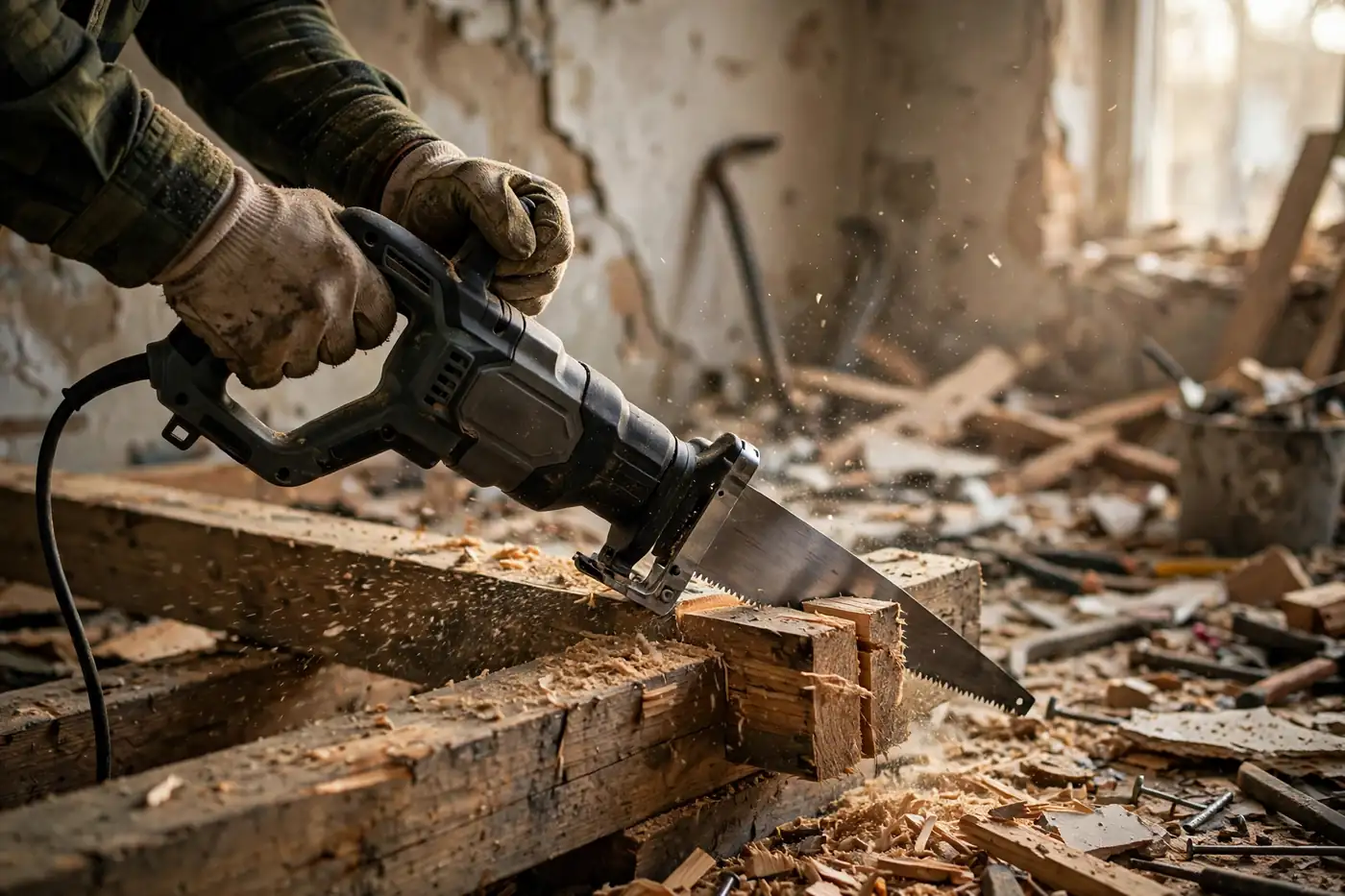
Tearing out an old deck, removing a section of wall, cutting a window opening, or pulling apart a rotted fence — this is the saw’s home turf. The blade reaches into tight spaces, cuts through wood with embedded nails, and doesn’t care much about what it hits. Demolition blades with aggressive tooth patterns exist precisely so you don’t have to inspect every stud for old fasteners first.
For this work, a longer stroke length (around an inch or more) moves through thick material faster, and an adjustable shoe lets you brace the saw against the workpiece so the blade — not your arms — does the work. A pivoting shoe is a genuine help here, because it keeps the saw stable as the angle of attack changes through a cut.
Pruning and yard work
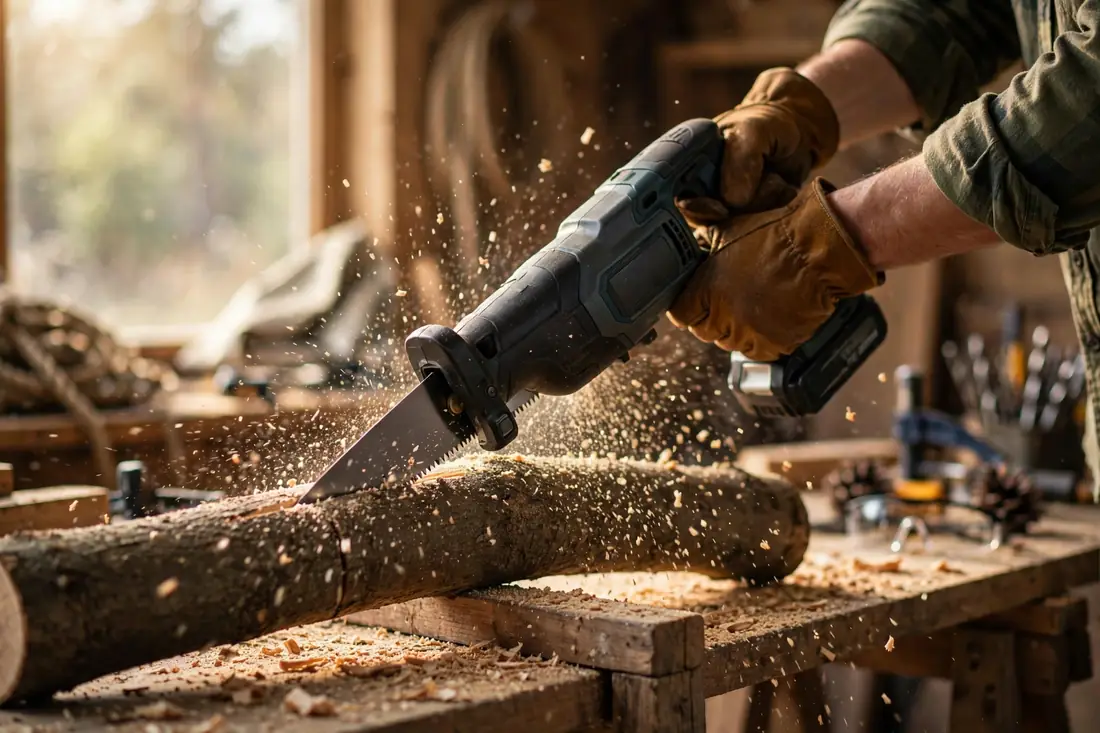
A recip saw with a coarse pruning blade is a surprisingly good tree tool. It cuts branches too thick for loppers and too awkward for a chainsaw, and it shines for storm cleanup, where you’re working at odd angles in a tangled canopy. Because the blade is thin and narrow, you can thread it between limbs that no chainsaw bar could reach.
For pruning, battery power is a real advantage: no cord to drag through the yard, no generator. Longer blades (9 inches or more) help you reach through a branch while keeping your hands clear of it. Just remember that pruning blades are consumables — cutting into dirt or grit dulls them fast, and a branch resting on the ground is basically a blade-killer.
Plumbing rescue and mechanical tear-down
When a fitting is seized, a bolt head is rounded, or a pipe needs to come out in a hurry, a recip saw with a fine-tooth metal blade becomes a problem solver. Plumbers and mechanics keep one around because it cuts in places a hacksaw can’t fit and where an angle grinder would throw sparks near something flammable.
Fine-tooth metal-cutting blades need lower speeds and steady pressure. This is the one job where variable speed and a trigger you can feather actually matter — full speed on thin sheet metal just melts teeth and heats the workpiece. Keep a few metal blades in the toolbox even if demolition is your main use; the day you need one, you’ll be glad they’re there.
The features that actually matter
Stroke length
Stroke length is how far the blade travels back and forth on each cycle, typically ranging from about three-quarters of an inch on compact models to an inch and a quarter on full-size saws. A longer stroke cuts faster in thick material because more of the blade’s teeth are engaged per cycle. A shorter stroke vibrates less and gives you more control in awkward positions.
Full-size saws with longer strokes are the right call for demolition. Compact “hacksaw-style” recip saws with short strokes are better for overhead work, plumbing, and tight quarters — they tire you out less when you’re holding the tool at arm’s length. If you only buy one, the full-size version handles more of the classic jobs.
Strokes per minute (SPM) and speed control
Most recip saws top out around 3,000 strokes per minute, with a variable-speed trigger that lets you run slower for control. Speed matters less than people expect for rough demolition work — you’re generally running near full tilt. Where it matters is metal cutting and starting a cut: a slow, controlled start keeps the blade from skating across the surface, and metal wants a moderate pace with steady pressure.
An orbital or “aggressive” cutting mode is offered on some saws — it adds a slight elliptical motion to the stroke, which clears chips faster in wood but vibrates more. It’s a nice-to-have for demolition, not a deciding factor. A smooth, progressive trigger is worth more in daily use than a mode selector you’ll touch twice a year.
Tool-free blade change
You will change blades on this tool constantly — switching from wood to metal, swapping a dull blade mid-demolition, trading a long pruning blade for a short flush-cut blade. A tool-free blade chuck (usually a twist or lever collar) turns a two-minute annoyance into a ten-second job. Look for a chuck that holds the blade firmly with no wobble; a loose blade is noisy, inaccurate, and hard on the saw.
Also check blade orientation: the best chucks let you mount the blade pointing up as well as down, which is surprisingly useful for overhead cuts where you want to see the cut line from below. It’s a small detail that separates thoughtfully designed saws from the rest.
Vibration control and counterbalance
A recip saw shakes. That’s physics — a blade flinging back and forth thousands of times a minute has to react somewhere. On long demolition sessions, vibration is what tires your hands and arms, not weight. Saws with some form of counterbalance or vibration-dampening design genuinely feel different after twenty minutes of continuous cutting.
You can’t evaluate this from a spec sheet, which is why it’s worth reading user reviews that describe extended use. Rubber overmold on the grip helps with comfort but doesn’t cancel vibration at the source. If your jobs involve long cutting sessions — tearing off a roof, gutting a room — put vibration control high on your priority list.
The shoe, the grip, and balance
The shoe (the flat plate at the front) is your third hand: press it against the workpiece and the saw stabilizes itself. A wide, sturdy shoe with a pivoting action is a meaningful feature for demolition. Cheap saws have thin shoes that flex, which turns the tool into a jackhammer in your hands.
Grip shape matters too. Many saws offer a D-handle that you grip like a pistol and a softer overmold on the front for your second hand. A barrel-style compact saw is held differently — more like a fat flashlight. Neither is universally better; it comes down to whether your work is mostly two-handed cutting in front of you or one-handed cutting overhead.
Corded vs. cordless
Corded recip saws are cheaper, never run out of power, and handle sustained demolition without breaking stride. Cordless saws are dramatically more convenient — no cord to manage in a demolition zone, no outlet hunting in the yard — and modern 18V-class platforms have closed the power gap enough that most DIYers won’t notice.
The honest deciding factor is what batteries you already own. If you’re already invested in a cordless platform, the cordless saw is the obvious buy, and it’s one more tool that makes the battery investment pay off. If you’re buying your first recip saw for a big planned demolition and you don’t care about mobility, a corded model saves money and never asks you to wait on a charger.
How to choose: match the saw to your jobs
Forget feature-counting. Start from your use case and work backward.
| If your main job is… | Prioritize | Consider |
|---|---|---|
| Home demolition (walls, decks, fencing) | Full-size saw, long stroke, pivoting shoe, vibration control | Corded for sustained work; cordless for convenience |
| Pruning and yard cleanup | Cordless, longer blade capacity, light weight | Compact or full-size; keep spare pruning blades |
| Plumbing and mechanical repair | Compact size, variable speed, tool-free blade change | Fine-tooth metal blades; blade-up mounting option |
| A bit of everything | Full-size cordless on your existing battery platform | A blade assortment covering wood, metal, and demolition |
One more practical point: buy blades, not just the saw. A recip saw with the wrong blade is a loud, shaky disappointment. A basic assortment — coarse demolition blades, medium wood blades, fine metal blades, and a long pruning blade — costs little and determines what the tool can actually do. The blade does the cutting; the saw just moves it.
What a recip saw won’t do well
Honest expectations matter more than specs. A recip saw is a terrible choice for straight, clean cuts in sheet goods — that’s circular saw work, and if you’re choosing between the two, the circular saw guide walks through it. It can’t cut curves in thin material either; that’s what a jigsaw is for, covered in the jigsaw guide. The blade is thin and flexible, the shoe rides rough surfaces, and the whole tool is built for speed and destruction, not accuracy.
It’s also not the tool for finish work, trim, or anything you’ll look at closely afterward. Think of it this way: the recip saw is the tool you reach for when something needs to come apart, get opened up, or get out of your way. If the cut needs to look good, reach for a different saw.
Key takeaways
- Choose a recip saw by job first: demolition, pruning, or plumbing rescue each point to a different set of priorities.
- Stroke length, SPM range, tool-free blade change, and vibration control are the four features that matter most in real use.
- The blade does the cutting — budget for an assortment of demolition, wood, metal, and pruning blades, not just the saw.
- Don’t expect precision: for clean straight cuts or curves, pick the right saw instead of forcing this one.
FAQ
Can a reciprocating saw replace a chainsaw for pruning?
For branches up to a few inches thick and for cleanup work, yes — a recip saw fitted with a pruning blade can handle small branches, but it is not inherently safer than a chainsaw — they are different tools with different risks. Follow all safety precautions for whichever tool you use. For felling or bucking large logs, no; that’s chainsaw territory.
What’s the difference between a full-size and a compact recip saw?
Full-size saws have longer strokes (around an inch or more), more power, and two-handed grips — better for demolition. Compact saws are shorter, lighter, and easier to maneuver overhead or in tight spaces — better for plumbing and detail demolition.
How long do recip saw blades last?
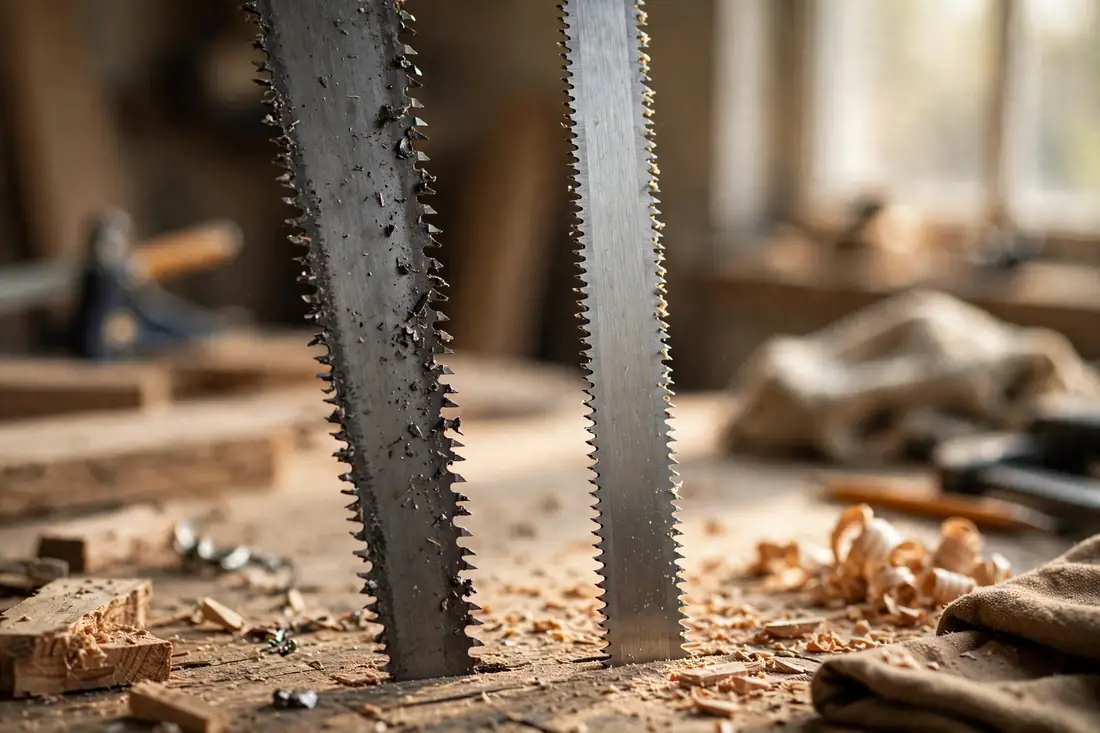
It depends entirely on what you cut. In clean wood, a blade lasts a long time. Hitting nails, screws, dirt, or masonry kills blades fast — that’s normal and expected. Buy blades in multipacks and treat them as consumables.
Is a recip saw safe for a beginner?
It’s forgiving as cutting tools go — the blade moves slowly compared to a spinning blade. A reciprocating saw can bind and jerk if the blade binds in the cut or the shoe is not held firmly against the workpiece. Keep the shoe pressed firmly against the material and let the blade do the work — never force it. The main risks are the exposed blade near your free hand and cutting into hidden wires or pipes. Clamp your work, keep both hands on the saw, and read through the safety rules before demolition day.
Your next step
Decide your primary job, pick the saw shape that fits it, and grab a blade assortment on the same trip. Then read the safety rules — demolition is where hidden pipes and wiring live, and ten minutes of prep beats a very bad afternoon.